Wednesday, 22 November 2023

Burrows & Badgers: Rules Discussion

Or: Episode #2 of "Games I don't play cos of Hit Points."

Like Carnevale, this is an atmospheric game with solid rules and a good miniature line. Likewise, this is more opinion than careful playthrough; as I mostly chugged dice and decided against buying the minis.

Now, the minis are kinda the whole point. This is a game of warbands of anthropomorphic animals. This is for everyone who liked Redwall as a kid. Plucky mice, mighty badgers, sinister foxes, wicked weasels - wielding a range of weapons, going on missions in a Mordhiem-esque campaign.


Setting & Fluff

While it won't be for everyone, the setting is easy to connect to. The animals are statted as you'd expect if you are familiar with Mouse Guard or Redwall. The minis are characterful. If it's the sort of thing that appeals to you you'll probably be adding minis to the shopping cart already. The rules work competently and logically. There is far less fluff than Carnevale but it is very clear what the game universe is. 

Overhead & Rules

A bunch of d4s to d12s are needed aka D&D dice.  Each model rolls a dice appropriate to their stat. I.e. a Mouse with d6 Ranged stat rolls against a Weasel's Nimbleness of d8 to score a hit. It's usually an opposed roll, highest wins but sometimes it is to beat a static number i.e. roll 3 to unlock a chest. It's simple and consistent. The dice 'explode' if you roll a maximum i.e. a 4 on a d4, or a 8 on a d8. This means weak minis like mice have MORE chance of pulling off an unexpected feat. Normally I dislike exploding dice but it seems suited to the theme.

I'm usually pro stats, but this may be a little over the top...

There are a lot of stats for each animal profile - 9 of them - which is very much bucking the trend. (Move, Strike, Block, Ranged, Nimbleness, Concealment, Awareness, Fortitude, Presence) and usually an innate skill, like a Flying.  Although I'm not on the 'one stat for everything' bandwagon, a few probably could be condensed together to be honest.

Turn sequence is the usual alternate activation (like Chess). Industry standard at this point. You can hide, climb, jump etc - all the usual typical of skirmish wargames.  Fighting and shooting (and magic) is just rolling dice against each other - i.e. an attacker will roll its Strike dice against the defenders Block dice. Once you've lost the usual 50% of models you test for each mini to see if it routs each turn - typical fare. 

The ~30 pages of rules are familiar, clean and consistent. Very easy to grasp. However (ominous: duh duh duh) each model has 16 hit points which you need to chip away at. Only every 4th hitpoint actually has an effect (-1 modifier to rolls). I only figured this out from reading the unit profiles as it wasn't clear in the book. Many people won't mind this, but blog regulars will know this is an instant deal-breaker for me.

There seems to be a focus on hiding (suiting a game of small woodland animals) and there is a cool thing called 'heroic sacrifice' where your wound penalties become bonuses but you go out of action for the rest of the game after your heroic feat. Not sure how often you'd use it but it was a cool concept. Also, some magic spells require ingredients to boost or even cast the spell which is something I don't think I've seen before in a wargame.

Although the rules are easy enough, the rulebook was a little hard to use and needs a few illustrations to break up the text and make finding things easier.

Mordhiem for Furries

The remaining ~90 pages are campaign orientated. This is NOT a lite, token campaign but is full featured. You can upgrade your den and gain bonuses. You can be aligned to one of several factions (Royalist, Rogues, Freebeasts, Wildbeasts). There is ~36 spells to learn from six schools of magic. (6 spells each school, convenient for d6 random rolls). 

The equipment list is thorough yet sensible with generic bows, thrown weapons, muskets, one handed weapons, polearms etc. Armour and equipment is also detailed just enough yet kept simple. The skills/abilities list is a bit gluggier - there's about 70 of them which waaay too much. Everything else has so far has been in the sweet spot of 'just enough detail, yet simple.'

There is very detailed injury tables (~20 results), and there is jobs your gang members can do "Wanderings" kinda random events you roll for between games to gain money, random gear and various advantages. The den upgrade choices are likewise very detailed. You can trade/buy gear and must pay upkeep depending on the size of your model (badgers eat more than shrews, naturally!). 

Warbands also get Fate Points allowing them to add an extra dice to a roll, and choose the best one. This works both in-game and on the campaign rolls (could be handy with avoiding injuries!). There is also an attempt to rate/balance warbands. There are 8 scenarios and ~20 secondary objectives to add flavour and variety.

This is one of the most thorough, detailed campaign systems I have ever seen. It's not complicated, but there is a LOT you can do. 


TL:DR

A logical, simple, consistent set of rules which I'll personally avoid due to everyone in the warband getting 16 hitpoints to record (o joy!).  Otherwise, strikes a really good balance of simplicity/complexity with 'just enough' detail. The skills were the only other area I went "OK that's a bit too much." It is the sort of game that might appeal to non-wargamers and is actually a decent entry point to wargaming. It's simple, but you could adapt it into a RPG with little effort.

A very strong, fully-featured campaign. This is not the usual 'lite campaign tossed in as an afterthought" but Mordhiem/Necromunda+. It's not super complex but there is a lot going on. There are characterful minis and a clear, familiar setting.

A solid set of rules and an excellent campaign.

----------------------------------

Random shower thought: Postage (I'm Australian btw) is now making GW look cheap compared to other manufacturers.

If I have to pay $30 P&P on top of a $60 order of cute but clunky animal minis (Oathsworn) that turns a $6 mini into a $9 mini. That's the same as GW - for a worse sculpt! Kinda kills the impulse purchase.

The other day Warlord wanted a minimum $150 order to reduce postage to more reasonable $18 - otherwise I could pay $40 P&P on a $40 order, for example! That doubles the cost per mini. GW would do $85 for free, and $10 for under that. I found it ironic I was looking at Kill Team and War Cry as I couldn't justify a Warlord order at 50% off!


Monday, 20 November 2023

Carnevale Fluff/Rules Discussion

Disclaimer: This is less a review than a read through with a bit of dice throwing to test mechanics so has less depth than my usual reviews. I'd like to talk about it though as it meshes well with some of my recent game design musings on fluff, depth etc.

The rules are glossy, beautifully presented and full of interesting gaming inspiration.

Fluff: I've been thinking about the importance of aesthetic/background and Carnevale delivers this in spades. 150+ pages of it before you even get to the rules themselves.

But is it good? Yes. It is a self-contained and distinct setting - Lovecraftian Venice meets Assassin's Creed - delivering the strong atmosphere games like Mordhiem did so well. The factions are distinct yet familiar - Cthulhu Deep Ones/hybrids, vampires, mad scientists, inquisitor/crusaders, thieves guild, patricians and rogue mages. 

The setting is easy to connect to - the archetypes are familiar and although the setting is unique, it is easy to grasp what each faction's motivations and playstyle is at a glance.

The rules themselves link well to the setting. Swimming (and drowning) and rooftop parkour figure distinctly in the rules and are important tactically. The rules fit the setting well.

The minis are also attractive and thematic (though I'm not a fan of the resin).

Elevator Pitch: Basically, a magical rift appears in the sky, triggering shenanigans. The masked, debauched Patricians battle the Thieves Guild aka 'good mafia'. The Rashaar (Cthulhu) maintain a benevolent cult giving alms while secretly summoning monsters to snack on folk. The scientists mix magic and medicine, experimenting on human and monster alike.The Vatrican inquistors use dubious methods to 'purge' who they deem unholy. Dracula and his vampires take on the attributes of their prey. The (imo) least interesting faction is a grab bag of mages etc "The Gifted."

The pictures of gaming boards are very interesting. You actually get a decent cardboard terrain setup in the starter box.

You could use Carnevale as a RPG guide. It's very in depth. It paints an engaging picture, with a unique world with familiar (accessible) elements. I mean - Venetian Assassins vs Cthulu - it kinda sells itself. Oh, and it has a campaign - a la Mordhiem.

What about the rules?

Overhead is not vast - characters have Life (hitpoints), Movement, Dexterity (agility/dodge), Attack, Protection and Mind stats on a card. They also have 2-3 special rules. Pretty fair for a game with say ~6 minis per side. 

The game uses multiple d10, with rolls of 7+ being successes (called "Aces" for no discernible reason). One of the dice is designated a destiny dice and rolls critical successes/fails on a '1' or '10.' Opposed rolls just compare successes.  In attack rolls, the success is equal to the target dexterity instead of being 7+.

Characters have Will which you can 'spend' to get a 3rd action, or add extra dice to rolls. Leaders get Command which they can spend to likewise boost nearby allies or allow them to move out of sequence. Basically, it's like Might from MESBG was turned into two separate resources for no reason - I presume both are similarly finite.

The now-standard alternate activation makes its expected appearance, with a limited overwatch 'hold' action. There are rules for swimming and a cool 'double jump' mechanic where you get a free 2nd jump off an object allowing you to say cross a canal by leaping onto a gondola or a lamppost then jumping to the next object.  You can attempt a 'controlled landing' to jump from higher objects - it fits the Assassin's Creed vibe. There are rules for grappling (throw off roofs); drowning (hold 'em under, fishfolk!) and diving into water off buildings. You can row gondolas. Magic is a thing but does not seem dominant from my limited experimenting. 

There's nothing wrong with the rules per se - I just hate hitpoints (~12 human, ~20 for a monster). It's a human, not a 20,000 ton battleship ffs. Why the recording? They also offer some decent tactical choices and while reasonably straightforward don't attempt to be the 'superlite' rule which are trendy atm. They're actually got some nuance and fit the theme well with lots of acrobatics and canal swims - not just generic "unlimited move, unlimited shoot, if you need to do anything, roll a 4+ on a d6 and you do it".

The card terrain is decent. Pictured are some of my random painting tasks for the week (including, aptly, some fish-men cultists). Oh, and LoTR mini #445 for the year.

I've never seen so many scenarios before...   ....36!  They have primary and secondary (also ~40 of these!) objectives, and detailed setup rules. Again this adds to the RPG feel and there is obviously a lot of love lavished on the setting. Huge replayability and lots of ideas for other games.

I painted 46 minis yesterday. Lots of white - blurgh! Basing and final touches will have to wait but I rate them functionally table-ready. These are for my French-Indian Dinosaur War game but I notice these also fit the Carnivale setting/era. Maybe not redcoats, but I'm definitely adding Black Scorpion undead pirates in my own Venice.

Yes, there is campaign rules but they are less impressive. Given the amount of fluff and scenarios there was less meat on the campaign rules than I expected. It's typical generic 'rules lite' of a page or so which ticks the boxes but seems more an afterthought compared to the care lavished elsewhere. You can gain XP, gold, choose new skills (could be abused, but some skills do cost more or less than others) and buy new characters. Functional, but it ain't Mordhiem. I get the feeling it was meant to be played as a series of linked 'historical' or 'narrative' scenarios without progression/xp - which was tacked on afterwards.

Overall, while I don't particularly plan on playing Carnevale I regard the rules as a useful resource and inspiration and I'm happy with my starter box.

TL:DR

+ Excellent fluff, truckloads of scenarios provides a useful gaming resource.  Lovely rulebook.

+ The rules are fine (unless, like me, you hate recording/hitpoints) and very thematic and cinematic

+ The starter box has lots of terrain which could be used for a range of projects

 ~ Campaign is not super deep

- The starter box minis look thematic but are annoying resin


Saturday, 18 November 2023

Carnevale Unboxing

 I received my 50% discount 'squashed packet' Carnivale box today from eBay. All contents were perfectly fine. Sweet! There was a lot of stuff packed in the box and I'm happy with my purchase although I am unlikely to play the rules themselves.

There is a complete table of colourful (albeit flimsy) cardboard terrain, as well as all rulers, dice, status counters etc. 

So far, very impressed. Unfortunately...

 
 The ~16 minis (2 warbands) were good sculpts, but made from cheap, nasty resin. 
(In the background is a fidget popper which makes a great paint mixing palette - you just wait til it dries and 'pop' the leftover paint into the bin.)

Some horrific mould connections resulted in unsightly chunks = lots of trimming/filing...

There were many breakages even when carefully clipping/cutting off residue. In addition the models do not slot into the 'slotta' base and are obviously intended to be placed on top of aftermarket cobblestone bases. Another $12 or so - no thanks!
 
The Deep Ones Rashaar come with slaves - to be either meatshields or a nutritious snack!

I actually found some extra small metal Deep Ones in my pulp mini box (Copplestone? Black Hat?) which I added to my warband. I'm not sure if they fit a 'stat profile' but I don't intend to use the rules.

The rules seem quite decent but I'm not a fan of marking off hitpoints in human skirmish games, so it's an automatic non-starter for me. I will, however, have a leaf through the rules, chug the dice and test the mechanics and discuss them sometime. 
 
Overall, I'm happy with the box. The rules have wonderful fluff that is worth discussing, there is lots of toys, terrain and accessories. It's just the minis - although they look good, they are not great quality. I had planned on getting more minis but I probably won't based on my experience with the starter box.

I also painted the Mumak crew, bringing my LotR paint total to 444 for the year.  As I have now 'cleared the deck' I am now free to order more LotR (according to my self imposed rules). 
 
If I start a new project (like Carnevale) I not only must paint the new minis within a month, but also paint an equivalent amount of random models from my pile of shame, so I always progress in my painted vs unpainted pile - I never go 'backwards'. It also encourages me to finish existing projects rather than start new ones (always my weakness).

The EM4 terminators and Westwind wolves are not connected (but may make a cool game!) they are just generic useful units for other games...

 
Some random models I grabbed to get some quick runs on the board. Unfortunately my 8 year old asked for help to finish his models, so I did both Star Wars rebels...
 

....and about 50 1:300 tiny Tumbling Dice WW2 planes which I found as part of my Excel inventory.

Italian and Soviets tangle around the Axis ocean airbase on a manmade atoll. 

The wee lad often explains his rules to me "If they have a friend killed they hate the enemy and get an extra dice roll to kill them in revenge" and "Darth Vader, even if he loses, has to roll another 6 to die cos he's so powerful" "If the planes are dogfighting together the other planes get an extra move to help them join in." He loves hanging out in the shed and has actually two 4x3' gaming tables in his room. Risk men, plastic ants and dinosaurs, and Matchbox tanks currently duel each other on the other board.

I was going to test out the Carnevale rules but it's late so another post, perhaps.

Tuesday, 7 November 2023

It Still Only Counts as One! = MESBG Mumak

 This purchase is 'wife approved' as I tend to energetically paint and use/display MESBG models.

  It's darker than this IRL.

I saw a youtube post titled "Mumak painted in only 3 hours." Maybe noteworthy for him, but as a dad, that was all the time I was intending to paint it in anyway....

I took over 3 hours in the end, but that was mostly due to the base, which was pretty fiddly.


==Recipe for those interested: (I tend to refuse to paint more than 3 layers...)==

Basecoat: Black Bunnings spray can all over

Body: Eshin (dark grey) drybrush, then Dawnstone (mid grey) drybrush

Howdah cloth: Doombull brown (red brown) undercoat, then Khorne red, then "something scarlet" light drybrush/highlight

Wickerwork: Rhinox (dark brown) undercoat, then Steel Legion Drab (pale brown) drybrush, then Ushabti bone drybrush

Wood Supports:  Rhinox (dark brown) undercoat, then Steel Legion Drab (pale brown) drybrush, Seraphim Sepia (yellow-brown) wash

Tusks: Ushabti bone, with Agrax Earthshade (brown) wash near the base of the tusks

Ropes: Ushabti bone, Agrax Earthshade wash occasionally if I didn't show the gap between ropes

Scenic Base: Lots of mucking about (tm)

Painting the ropes took the longest time and the base was a pain in the bum. I planned to do warpaint on its face and add grass tufts to the base but I went over my time limit and stopped at 'table ready.' I also may do some home-made spikes/ropes on the tusks (with hairy string and spikes made from ends of cocktail skewers).

Imposing a time restriction (and accepting a little less polish) and a 'can't buy new minis until last purchase is done' has lead to incredible productivity. I've painted easily 650+ minis this year.

 
I guess it still counts as 1 mini painted though. My MESBG total is now 431 for 2023.

The random minis are for a game set up to play with my wee lad. He wanted to play "wargs and trolls."

He enjoys playing the Third Age mod (free) to Medieval Total War 2. I mention this in case anyone is interested as MTW2 costs about $10 and runs on a potato PC. It's basically big battle games (100s, 1000s of troops) in Middle Earth and a must-have for any LotR wargamer.

For a more personal game (where you fight as a character FPS style, but lead a warband of 30-100) I suggest The Last Days (again, a mod) for Mount and Blade Warband. It is cheap and will likewise run on a potato laptop.

I also shelled out for an official army book, tired of printing out my own lists. My son has spent ages looking through it, enjoying working out the values of characters and monsters.

MESBG is lauded as being far more forgiving than 40K/AoS (or actually any other GW title) in not needing a library of rulebooks, supplements and codexes: merely needing a $90AUD rulebook and a $80 army book. It does have all the factions but man, $170 just to play the game without even any minis...    ....and we call this "good." What's the strategy called - 'anchoring'? 

For less than the price of this rulebook; I just bought a discount ($70 down from $130) starter box of Carnevale. 

240 page rulebook. 2 warbands of minis. A full table of terrain. All the dice and bits. A gondola!

Excel Sheet & The Dad Budget

I've got an Excel list of every mini and project in my shed. I list if: 

(a) do I need minis (b) do I need to paint minis I have (c) do I have rules....   ...and a note on 'how much' $$$ it will take to complete them, ranked by cost. 

It helps when prioritizing purchases/spotting sales - i.e. BFG and Carnevale ranked in the $100-200 range, so when Carnevale dropped down into the sub-$100 bracket I pulled the trigger. I've also colour coded projects by time commitment. 

This leads to wife approval (i.e. regular projects painted and bargain miniatures) which increases my budget (both shed time and $$$)!

Thursday, 2 November 2023

Project Progress and Random Rules Round Up #1

 I have been cleaning out my shed and have made an excel table for myself about all existing minis and past/current/future projects.

1) Do I have minis for it? (if not, what is the 'buy in')

2) If (1) then have I painted enough minis to play? Do I need terrain? (pizza time!)

3) Do I have a set of rules I'm willing to play (esp with kids)?

Basically 'where am I at?' with every mini box in my shed, and roughly pricing out unfinished/future projects.

For example, I am eyeing off BFG & Mordhiem again. I lack the minis, but I have plenty of terrain, game mats, and even the old rules.

I have piles of weird west minis and terrain, but lack rules. My psychic dinosaur knights have minis, dinos but also lacks rules. This is my 'homebrew tinkering' space. Weird War II I has painted minis, terrain AND decent rules so it is good to go. Ditto Battletech although the rules are not so great. Etc etc.

Some projects I've identified that I may never finish. I've got lots of nice Perry Greeks but I'm not that interested in the era (nor painting that much white/skintone!) My 1:2400 Napoelonic ships are too hard to tell apart. My WW1 1:300 tanks are too tiny to be cool. With it now being OOP, I don't really want to keep collecting/painting my half-assembled Imperialis Aeronautica.

Anyway, in search of 'better' rules I've been digging through my cupboard. Sometimes rules which weren't 'good at the time' suddenly appeal later on. Perhaps they were competing with other games, or my tastes may have changed. I'm not going to playtest them all again, but I am going to grab out random ones that catch my fancy and briefly discuss them.  

Cruel Seas (Coastal Warfare, Warlord Games)

In Print? Yes
Hit or Miss? Miss

(-) I love coastal warfare and the minis are good (no regrets there) bu the rules are a mess. It's just clunky and uninspired, with dozens of hitpoints, many modifiers, gluggy and varied resolution methods. It just feels randomly slapped together. The rulebook itself is not that easy to use either. There's nothing really on detection which is a big deal as 90% of coastal actions took place at night and it kinda key to the whole tactics.

(+) I like the 'wake' where the length of the wake behind the boat denotes speed.

(~) Shell splashes and spray around a boat gives a BONUS to fire - you'd think it would obscure the target. It's so weirdly implemented I'm not sure what the point is.

I'd use literally any other coastal rules I could find before this. I find this set of rules a really weird choiuce by Warlord. I love the idea of it but I can't see it being commercially viable. Faster, better rules and a series of real-life scenarios might have sold me more.


Blood Red Skies (WW2 Dogfight, Warlord Games)

In Print? Yes

Hit or Miss? Miss

(+) This is kinda the abstract game I am looking for in aerial combat; the game is simple, plays fast and abtracts the minutiae of air combat with "advantage" abstracting height and energy. Three stats (agility, speed, firepower) and a couple of special traits for each plane keep it simple, and you can play handfuls of planes each quite quickly. I think there is probably a decent game hidden in there, and it eschews rivet counting for pew-pewing. It attempts something no other aerial game does.

(~) The game relies on a hand of cards to give it any depth; it's just pretzels (without even beer) otherwise. The abstraction may be too jarring for some.

(-) There is no detection mechanics.  I'm not sure what the game is trying to be - a CCG? The pricing is baffling. Planes are $50AUD for 6 cheap plastic things (similar price to a beautifully sculpted 10-man Necromunda warband) or $30 for a single ace. Insane when you can get 1:300 metal minis in similar size for $2-3 each. Everything is cheap, plasticy and cardboardy. It's like a super simple, cut-budget X-Wing where they are actually selling you 'cards' for ridiculous prices. Heck even the cards are small and cheap looking.

In addition, the 'rulebook' in the starter box is three pamphlets which does a terrible job of explaining the game. It's like buying a takeaway pizza where you just get the base, and having some cheap cheese slices tossed on top of the box without explanation. But you suspect - if you bought enough extra ingredients - the pizza might be a good snack with a movie. 


The answer to "how many minis can Dad paint in an hour and a bit" - basically only basecoated Star Wars for my wee lad, who was supposed to paint them himself.... He's happy with them though...

Dracula's America (Weird West Skirmish, Osprey)

In Print: Yes
Hit or Miss? Meh...

(+) You can activate 1 OR 2 models each activation (interesting). The campaign system is quite thorough and I think it would lend itself to be a good club campaign game. Shoving people off things is fun. It does what is says on the box.

(~) It reminds me of a simpler, blander knock-off version of Savage Worlds/Deadlands. Very limited reaction mechanic.

(-) It adds playing card activation 'just because Deadlands'. There is only a single stat which comes in only 3 levels (d6, d8, d10 - which are more tied to if a model is a hero or mook than anything else) so it relies on special rules to differentiate a fledgling vampire from a wild hog.

There's nothing really wrong with these rules - they were just a bit bland. Like volleyball - I would join in a game if asked but wouldn't be advocating it to my friends.


Gladiator (Gladiator skirmish, Warhammer Historical)

In Print: No

Hit or Miss: Not sure. I can't recall my last playtest. 

(+) It's a ME:SBG spin off with extra rules on top, such as kneeling, throwing nets and even cinematic hit locations and special hero moves. There are weird and wonderful weapons, chariots and even elephants and wild animals like crocodiles and lions! It's quite RPG ish - a list of gladiator names, a slave market and deep campaign options for running your own ludus. There's even chariot racing and naval battle rules.

(~) I've never got into this merely due to gladiator models (to the extent the game requires) being pretty much restricted to Foundry or Eureka's boobiators back in the day. If someone did a plastic box set nowdays I'd probably dust this off. 

(-) While I like the rules themselves, I feel the ME:SBG sweet spot is ~30 models not ~4-5. While it will work fine, I'd probably go with a different system.

Monday, 30 October 2023

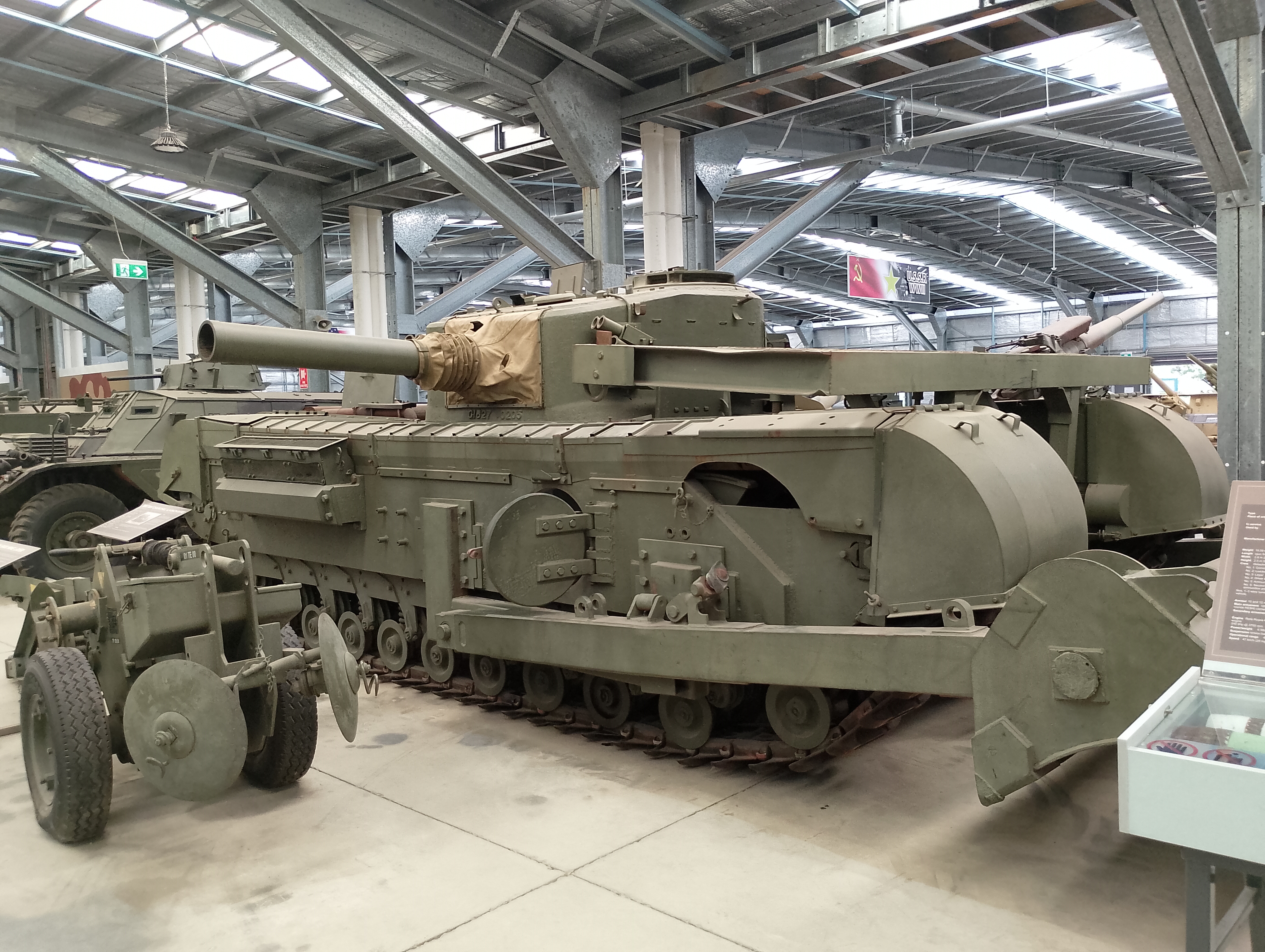
Australian Armour & Artillery Museum

The younglings and myself visited Cairns the other week. It's ~1500km from us. For a frame of reference, think London to Moscow. Or New York to Florida. And we're in the same state. Not even at the extreme farthest ends of the state, either.

Naturally we stopped at the tank museum.

The girl (10) enjoyed it for about 10min. She spotted and identified all the Girls Und Panzer tanks so there's that I suppose. 

The wee lad (8) enjoyed it for about 30 min. He identified a LOT of them actually (thanks to War Thunder and bedtime reading of WW2 weapon encyclopedias) especially the obvious ones - Stuarts, Grants, Lees, Shermans, Churchills, Stugs, Panthers and Tigers. Since his bedtime reading also involved snippets from Tigers in the Mud he was keen to check out the Tiger. The Tiger and the Panther were so big! Favourites included Firefly, Schimmenwagen and Kettenkrad (it's a motorbike tank dad - cool!). He was disappointed how cramped the Lee was inside - in his head canon it would be like mobile home due to its side doors. 

Mum liked the misnamed Goliath RC tank. I was dragged away after a mere hour or so thanks to my cruel family. The kids had a ride in an APC with the sides cut away (I think it was a FV432) which they reckoned was like riding in an eggbeater. Apparently on museum anniversary day they fire up and drive around ~50 'exhibits!'

The Su-152 proves size matters with a round the size of a softdrink bottle...

Below are some photos. I've got photos of most of the tanks and APCs so if you want a shot of a particular tank or tanks, shoot us a line in the comments. The index of the exhibits is here.

Here is the 26min  walking tour. They have a pretty interesting Youtube channel as they restore exhibits etc.

We took lots of photos - as although the lad and I are painting up our 15mm WW2 tanks for a fantasy dieselpunk apocalypse wargame (involving mutants, cannibals and savage monsters as well as tank pirates roaming a wasteland Europe - think Mad Max meets Mortal Engines meets Fury) - we are painting them mostly 'proper' colours in case we want to use them for actual WW2 games. Once my bank balance recovers, I think some more 15mm tanks are in order...

The wee lad was impressed by the size of the German heavies....

...but was most envious of the 'motorbike tank!'

 I was amused to see a Bolt Action display and hear employees discussing Wargaming (from World of Tanks). Obviously there is quite a bit of a crossover between tabletop wargamers/dad pc gamers/'old farts who like to look at tanks.'


My daughter retreated to the small arms exhibits and underground firing range(!) as it was cooler downstairs...  Your ticket works for 3 days but unfortunately I had to go to inland that day.

It was an amazing museum and totally worth a visit - if only it wasn't 1500km away...

Weird fact: There is a free tank exhibit in the Cairns botanic gardens. But - plot twist - it's water storage tanks with art displays inside them!

I reckon the Cairns council got visitor feedback "The tank museum is awesome but we wish it was free and you could go inside the tanks" ... and in typical city council/monkey paw style they misunderstood....

Tuesday, 24 October 2023

Game Design #100: Rules Complexity vs Tactical Decisions and the "No Measuring" Wargames

I've been thinking about simplicity, abstraction and streamlining due to my own homebrew jet rules. I guess the question I've been asking is "where do I sit" and "is abstracting this a good tradeoff? Do I lose too much depth by doing x?"

Personally, in my gaming preferences - I've decided Infinity was too complex, although it has many decisions and depth. I've decided Song of Blades was too shallow. I like ME:SBG level - while not great at anything, it is just simple enough and has just enough decisions/depth.

It's certainly not a crusade to say "simplicity bad" (actually it's the opposite for me) but as usual, question why certain mechanics are used and what the implications are.

The Rules Complexity (Mental Load) vs Player Decisions (Tactics/Depth)


The board games are, obviously not directly comparable to the wargames, but are just to help make the graph axis make sense.

Whenever I look at rules, my question was usually 'is the complexity the extra rule/mechanic adds worth it? Does it bring enough new tactics to justify the mental effort?' but lately has been 'does the simplification remove too much depth?'  

I.e where is the rulebook on the x & y axis? And which way is it moving?

The complexity ("lots of rules") equates to mental load on the player. Infinity (100s of special rules) and Warmachine (lots of interacting special rules and potential 'gotchas' have a higher mental load than average. Necromunda has a higher rules complexity than War Cry.  Go is much simpler than Chess but has similar high levels of decision making and tactics (and thus serves as my 'ideal').

A good 'complexity' criteria is: do players pick it up fast OR do you need to consult the rulebook a lot?

Player decisions are how often and how important player decisions are in influencing the outcome. Are there opportunities for the player to impact the action through their decisions? (Tactics/Depth). Or is it just random dice rolling, where we could remove the terrain and miniatures altogether and get a similar, random result. 

A good 'tactics' criteria is: Do good players win consistently? Do positioning of units and player choices matter? Or does luck control the game?

I personally prefer low complexity, high decisions - buuuut lots of decisions aren't always desirable either. I liked the movie Inception but I wouldn't want to watch it tired on Friday arvo after work.  Sometimes high complexity seems needful or desirable - e.g. naval/age of sail gamers seem to require a certain amount of 'crunch.' So obviously personal preferences determine what we play.

 --------------------------------------------------------------------------------

No Measuring: Unlimited Movement/Shooting

I've been thinking about this lately as I work out what to abstract in my homebrew jet rules and it has popped up a few times lately on this blog, so I'd thought I'd share my musings.

I've covered "single stat" mechanics ages ago (and why they do not necessarily add simplicity, esp in genres requiring differentiation between units). I'd like to explore the concept of unlimited movement and firing ("look ma, no ruler!") and I'm going to go against the cool kids by questioning their value.

The 'no measure' ideas has been around forever: first for me was Crossfire 10-15 years back. No measuring tends to need a heavy investment in terrain to add tactical choices, and games do play differently, but there are other aspects to consider.

No ruler does simplify and speed up things (good) - but it does not completely eliminate bending over the table checking LoS etc - and it may come at a cost. It's not an automatic improvement.

Unlimited Shooting vs No Measuring

Unlimited weapon range is not automatically a bad thing. It's logical, if weapon ranges exceed the table. A 28mm (1" tall) man with a modern rifle should be able to range very effectively across a 4' table (which if viewed to scale is about 50-100m).  A company of 6mm musketeers might not. So the answer is "it depends." 

No measuring at all is where I see some problems.

Having unlimited range puts the onus on the importance of terrain to gain an advantage, vs say the 2' threat 'bubble'  created by the generic 24" shooting range. Removing the threat bubble does remove tactical choices.

Also, if you truly go 'no ruler/measureless' it can impact other things. From personal experience, it's difficult to shoot a pistol or bow at 25m (24") let alone 50m. In both history - and even tv shows - range (measurement) has a major impact on lethality. Musketeers might be able to hit targets at 100m - but should they be as effective as they are at 25m? How do you show this without measuring?

If there is no measuring, you may lose important differentiation and tactics between weapon types. E.g. what stops a semiautomatic pistol outsniping a semiauto rifle across the table?  What extra rules (complexity) will need to be put in place to prevent this?

So while 'no measuring' does speed up play, there are gameplay disadvantages.

Unlimited Movement

This is usually not truly unlimited. If you could teleport anywhere on the board, you kinda remove the difference between melee and missile troops and make an argument for removing the board altogether!

Usually, 'measureless' movement means: you can move unlimited distance in a straight line until (a) you hit an obstacle/terrain (b) want to pivot (c) are interrupted by an opponent reacting - or some similar combination of the above.

The Danger of Doing too Much

When a unit takes its 'turn' every other unit on the table is frozen in place while it does its business. This is usually bad. I've discussed this in posts about actions per turn. To recap:

The more a unit does in its turn, the longer everyone else is effectively frozen and the less fluid and realistic a game is. Basically: we limit what a unit can do in its turn, otherwise it can rambo around the board killing everyone unopposed. I.e. traditionally a unit might move 6", shoot 24" and roll a single dice with 5+ to kill. If we increase what a model can do - moving 48", shooting 48" and rolling 6 dice with 5+ to kill - a model might be able to wipe out multiple enemies in a single activation, without much way for the other player to prevent it. Even if this was 'realistic' it is not fun for the inactive player. The active unit is unreasonably powerful. Unlimited movement can obviously have this effect unless it is artificially constrained.

Unlimited movement abstracts the implicit time/ground scale, potentially to the ridiculous

A unit's "turn" is a 'slice of time' - even if not explicitly stated.  E.g. we can suppose a Necromunda turn is measured in a dozen seconds or less; while a Jutland-size WW1 naval battle may be measured in a dozen minutes. We can sense when a scale is "off" i.e. in Bolt Action 28mm WW2 rifles shooting only 24" where bullets cannot reach the length of a bridge. There is an implicit scale in all wargames, which is shown by what your minis can do in that timeframe and the distances involved. Removing measurement messes with this implied scale.

If a unit can move unlimited distance, we could now have a unit whizz across to the enemy baseline, getting behind all the enemies; while 30 opponents stand around doing nothing. Now typically 'unlimited' rules avoid this by making units move in a straight line, until they hit something. Or when they want to pivot and head a different direction. The implied scale is thrown out the window. It's like a man sprinting 250m+, but in the same time another guy runs 25m until he hits a waist high hurdle, and stops dead. Also in the same time, a second guy runs 50m, then turns and stops dead. Simply turning 90d or vaulting a fence should not make that much difference/take that much comparative effort. Cinematic... ....or silly?

Unlimited movement, like unlimited shooting, relies heavily on much carefully laid-out terrain to create tactics. 

On a featureless board with unlimited movement, there is little difference between shooting and melee - you can either shoot or - equally easily - zoom across the board to melee them. A sword and a sniper rifle are the same. You may as well remove the board and minis altogether. A game with unlimited movement or shooting tends to rely on the players to have (or be willing to make) significant terrain.

Reaction mechanics - adding complexity to solve a self-made problem?

A common workaround to stop units zooming around unopposed are reaction mechanics. These allow non-active units to respond and 'interrupt' the active players by shooting or perhaps charging them.  However reaction units adds a whole new layer of rules, slows the game and detracts from the 'simpler + faster' argument. It also feels like it is fixing a self-created problem: adding a reaction mechanic (complexity) to fix a problem created by the unlimited movement mechanic (attempted simplification).

Neither 'measureless' mechanics completely eradicate the need to stoop over tables with a ruler to check line of sight/if a move is straight - half the time all you are doing is eliminating the need to read the numbers on the ruler.

But.... measureless/unlimited range games play differently and I like it! If this is the reason (or it pushes some desired aspect of gameplay) go for it! Removing measuring or movement does not make a bad game. It just makes it different. 

However, my caution is removing measurement simply to 'streamline' and 'simplify' a game (or just cos it seems cool) may be false economy: losing too much in tactical depth/realism/gameplay - i.e. unintentionally moving the game down into the Yahtzee corner of my sketch above - or countering this by adding in extra mechanics like reactions and thus ending up in the same spot...

TL:DR So... unlimited/measureless anything bad?

No. I'm not saying that at all. I've had fun playing many unlimited range/move rules. However from a game design sense I'd be wary of making them a core 'feature' of the game - although it may be a major selling point for some folk. I.e. I'd make it 'a' feature (like in Rogue Planet which had an interesting resource pool as well) not 'the' feature.

-I think unlimited range weapons make sense in modern+ settings, but it may be difficult to remove all reference to range (no measurement) without losing important depth or differentiation. 

-Unlimited movement I am more ambivalent about - within a narrative RPG and similar it's fine, but in a wargame - and that's what we're discussing here - it makes a lot of tradeoffs for its benefits. 

Again, it's not 'x mechanic is best' and 'only play x game, your choice in games suck' - game preference varies wildly - but rather from a design standpoint:

 'What should we abstract?'...   ...'is x mechanic really that good?' 

Is too much 'lost' in the simplification/abstraction?  Are the benefits of adding complexity 'worth it?'