Along with wading though the Malazan Books of the Fallen, I've also read Waking Fire whilst supposedly minding small children in various locations.
This is the first book of a new series by Anthony Ryan, who "burst onto the scene" recommended by many authors with his Raven's Shadow trilogy. Although I was not particularly impressed with this first series (despite the fulsome praise, the books were a solid "meh" out of 10, showing signs of skill but generally hackneyed and forgettable) I decided to try Waking Fire.
I'm glad I did. Although Mr Ryan is still a tad clunky, he at least has gone for a fun world: a steampunk-y 1900s where Wild West style "contractors" armed with repeating rifles hunt dragons for their blood. Yep, you heard me right.
Amongst paddle steamers and six-guns, the dragons also serve as the magic system - their blood (depending on the species) can give telekinesis, pyrokinesis, and telepathy when imbibed or injected by the "blood blessed" - i.e. mages - of the world. And they are dying out. Perhaps the quest for the legendary White Dragon can prove the answer. The forests and wildlands, inhabited by raptor-like Green dragons and the scaly, feral "Spoiled" - a degenerate species of savage humans - give a somewhat Lost World feel.
Set against a backdrop of warring corporations and empires, with blood-blessed spies, street thugs naval officers and dragon harvesting contractors as main characters, Waking Fire is a fun book. The hunt for the legendary "White Dragon" is a nod to Moby Dick, although the feel of the book is a cross between Sanderson's Mistborn and a "Retribution Falls" which takes itself a little more seriously. Yes, there are also pirates.
You'd like it: If the idea of wild-west mages chugging dragons blood and dueling with telekinetic powers sounds like fun. It you like exploring, and steampunk with an Indiana Jones/Lost World vibe. It has only a few characters so it's easier to follow than the 1000 characters that most modern fantasy books require you to keep track of. It's definitely more sophisticated than his first series (admittedly not a high bar to beat). Also, drinking dragon blood for magic powers makes more sense than the metal shavings of Mistborn. I mean, metal shavings? Really?
You'd pass: If you are sensitive to an occasionally clunky writing style (Mr Ryan is serviceable but distinctly not in the class of Abercrombie, Martin, Lawrence etc). If you are one of the soulless folk who think Wild West+dragons sounds silly.
Recommended: Yep. 3.5 out of 5 Skip the forgettable Raven's Shadow series, and start your journey with Mr Ryan here.
28mm/15mm Miniatures Gaming Game Design; In-depth Rules Reviews; Game Discussion Google Group
Showing posts with label Book Review (Fiction). Show all posts
Monday, 1 August 2016
Saturday, 5 March 2016
Book Roundup #8: Fantasy
Fallen Blade (Jon Courtney Grimwood) = 3.5 Stars
Venetian assassins and vampires, pitted against "krieghound" werewolves of the Holy Roman Empire? It couldn't sound any more cliched - "Underworld"-in-Venice, anyone? but is actually quite fresh and well written. The Moorish "Atilo" and his marriage to the heiress "Desdaio" is one of more than a few sly nods to Shakespeare.
You'd read it: Vampires vs werewolves, with a touch of Shakespeare? Underworld: Venice? Quite well written - Mr Grimwood is slumming it a bit I feel.
You'd leave it: Because vampires and werewolves are almost as tired as zombies
In the Eye of Heaven (David Keck) = 3 Stars
I initially abandoned this book as being too confusing - too much "hard work" to make sense of its world and plot. The author likes. Using. Short sentences. The writer is a "writer" rather than an amateur historian, gives a better feel for his world in a few jumbled, terse sentences than the wordy exposition of the Red Knight. It's pleasantly "different" from my usual fantasys fare.
The trilogy may never be finished - the first two books came out in 2006 and 2008, and we're still waiting for the concluding book. This makes notorious slackers GRR Martin & Patrick Rothfuss look like a bundle of feverish writing energy.
You'd read it: An interesting book, with a choppy writing style that delivers a good "feel" for the world. Like the James Enge books, an interesting change of pace for a jaded palate.
You'd leave it: A bit confusing, and likely the trilogy will never be finished
Red Knight (Miles Cameron) = 2.5 Stars
100 years war mercenary company takes on the fairie folk ("the Wild").
At first I thought it was lame, then it grew on me, before faltering off again to end in cliches. The second book was an ever bigger mess of exposition (the author is more amateur historian than fiction writer) which I didn't bother to finish. I could have edited the 450-page book down to 150 pages of actual story and plot.
You'd read it: Because you like the idea of 100 Years War longbowmen vs fae and wild forest critters. Some originality and unpredictability in places.
You'd leave it: Because of the enthusiastic but painfully verbose amateur-historian exposition style could be bettered by many high school students.
Malice, Valour - John Gwynne = 4 Stars
The first two books of the Faithful and the Fallen (Malice, Valour) have been my surprise hits of 2016. It has a very David Gemmell flavour to it - perhaps a somewhat B-grade David Gemmell - but it mixes old school fantasy tropes with the "new gritty and grimdark" in a pleasant balance. Even better, the writing has improved in book 2 which points to a promising finale in books 3 and 4. Also, the conceit of having a villain who idealistically thinks he is the saviour of the world (rather than the dark lord he is gradually becoming) is a fresh one.
You'd read it: Because you like your fantasy grim and dark, but not relentlessly grimdark. And you like it when some heroes are occasionally actually heroes, and not always unmitigated bastards. Heck, even the villains sometimes have some redeemable traits.
You'd leave it: Another series with 4 hefty 900-page tomes; or you haven't read all David Gemmell's books yet. Also, it is a bit oldschool i.e. "farm boy doesn't know his destiny" with "dumb sidekick" and "hot, impetuous ninja girlfriend" as well as "mentor who is a secret Jedi" - it visits pretty much all the fantasy tropes.
Venetian assassins and vampires, pitted against "krieghound" werewolves of the Holy Roman Empire? It couldn't sound any more cliched - "Underworld"-in-Venice, anyone? but is actually quite fresh and well written. The Moorish "Atilo" and his marriage to the heiress "Desdaio" is one of more than a few sly nods to Shakespeare.
You'd read it: Vampires vs werewolves, with a touch of Shakespeare? Underworld: Venice? Quite well written - Mr Grimwood is slumming it a bit I feel.
You'd leave it: Because vampires and werewolves are almost as tired as zombies
In the Eye of Heaven (David Keck) = 3 Stars
I initially abandoned this book as being too confusing - too much "hard work" to make sense of its world and plot. The author likes. Using. Short sentences. The writer is a "writer" rather than an amateur historian, gives a better feel for his world in a few jumbled, terse sentences than the wordy exposition of the Red Knight. It's pleasantly "different" from my usual fantasys fare.
The trilogy may never be finished - the first two books came out in 2006 and 2008, and we're still waiting for the concluding book. This makes notorious slackers GRR Martin & Patrick Rothfuss look like a bundle of feverish writing energy.
You'd read it: An interesting book, with a choppy writing style that delivers a good "feel" for the world. Like the James Enge books, an interesting change of pace for a jaded palate.
You'd leave it: A bit confusing, and likely the trilogy will never be finished
Red Knight (Miles Cameron) = 2.5 Stars
100 years war mercenary company takes on the fairie folk ("the Wild").
At first I thought it was lame, then it grew on me, before faltering off again to end in cliches. The second book was an ever bigger mess of exposition (the author is more amateur historian than fiction writer) which I didn't bother to finish. I could have edited the 450-page book down to 150 pages of actual story and plot.
You'd read it: Because you like the idea of 100 Years War longbowmen vs fae and wild forest critters. Some originality and unpredictability in places.
You'd leave it: Because of the enthusiastic but painfully verbose amateur-historian exposition style could be bettered by many high school students.
Malice, Valour - John Gwynne = 4 Stars
The first two books of the Faithful and the Fallen (Malice, Valour) have been my surprise hits of 2016. It has a very David Gemmell flavour to it - perhaps a somewhat B-grade David Gemmell - but it mixes old school fantasy tropes with the "new gritty and grimdark" in a pleasant balance. Even better, the writing has improved in book 2 which points to a promising finale in books 3 and 4. Also, the conceit of having a villain who idealistically thinks he is the saviour of the world (rather than the dark lord he is gradually becoming) is a fresh one.
You'd read it: Because you like your fantasy grim and dark, but not relentlessly grimdark. And you like it when some heroes are occasionally actually heroes, and not always unmitigated bastards. Heck, even the villains sometimes have some redeemable traits.
You'd leave it: Another series with 4 hefty 900-page tomes; or you haven't read all David Gemmell's books yet. Also, it is a bit oldschool i.e. "farm boy doesn't know his destiny" with "dumb sidekick" and "hot, impetuous ninja girlfriend" as well as "mentor who is a secret Jedi" - it visits pretty much all the fantasy tropes.
Saturday, 20 February 2016
Shakespeare's Star Wars: Verily, a New Hope (Book Review)
We have so many attempts to "modernise" the bard's work; so why not take a contemporary work and translate it into iambic pentameter? Genius!
Friends, rebels, starfighters - lend me thine ears...
---
RED LEAD: Good men, each now shall speak and state his name
RED TEN: Red Ten doth here stand by
----
RED SIX: Disaster at me strikes!
BIGGS: Eject, forsooth!
RED SIX: I may yet set it right
BIGGS: Anon, pull up!
RED SIX: Nay, I'll warrant that all will be well - [Explosion: Red Six dies]
COMPUTER: In seven minutes shall the Death Star be
Within the range of our fair rebel base
VADER: I sense the Force in this one here, almost
As if I did my younger self espy
--
VADER: I feel thy lack of faith disturbing
TARKIN: Cease! No more of this! Lord Vader, let him be.
VADER: As thy will. [Aside:] My point hath been well made
Upon his prideful, unbelieving throat
---
BEING ONE: Negola d'waghi wolldugger!
BEING TWO: I say!
He liketh not thy look
LUKE: Forgive me, Sir
[Aside:] Nor do I like his face, yet do I groan?
--
HAN: Tis but the ship that hath the Kessel run
Accomplish'd in twelve parsecs, nothing more
--
HAN: Nay, not that:
The day that Jabba taketh my dear ship
Shall be the day you find me a grave man
GREEDO: Nay oo'chlay nooma. CHespeka nofa
Na cringko kaynko, a nachoskanya!
HAN: Aye, I'' warrant thou hast wish'd this day
[They shoot, Greedo dies]
[To innkeeper:] Pray, goodly Sir, forgive me for the mess
[Aside:] And whether I shot first, I'll ne'er confess!
--
OFFICER ONE: [through com link] But who art thou, and what's thy number code?
[Han Solo blasts comlink]
HAN: That conversation did my spirits bore!
Now Luke, prepare thyself for company!
--
Okay, okay, I'll curb the quotes...
This book has been my most fun read since Johannes Cabal: Necromancer. It appeals to the inner geek on many levels - I mean, if the words "Shakespeare's Star Wars" does not make you prick up your ears, you're probably reading the wrong sort of blog.
You'd read it: It's Star Wars, Shakespeare style! 'Nuf said.
You'd leave it: You care for neither Star Wars nor the immortal bard. In which case, prithee fly from this blog, ne'er to return!
Recomended?
Zounds! This IS the book you're looking for...
Friends, rebels, starfighters - lend me thine ears...
---
RED LEAD: Good men, each now shall speak and state his name
RED TEN: Red Ten doth here stand by
----
RED SIX: Disaster at me strikes!
BIGGS: Eject, forsooth!
RED SIX: I may yet set it right
BIGGS: Anon, pull up!
RED SIX: Nay, I'll warrant that all will be well - [Explosion: Red Six dies]
COMPUTER: In seven minutes shall the Death Star be
Within the range of our fair rebel base
I'll be checking out The Empire Striketh Back and the Jedi Doth Return...
VADER: I sense the Force in this one here, almost
As if I did my younger self espy
--
VADER: I feel thy lack of faith disturbing
TARKIN: Cease! No more of this! Lord Vader, let him be.
VADER: As thy will. [Aside:] My point hath been well made
Upon his prideful, unbelieving throat
---
BEING ONE: Negola d'waghi wolldugger!
BEING TWO: I say!
He liketh not thy look
LUKE: Forgive me, Sir
[Aside:] Nor do I like his face, yet do I groan?
--
HAN: Tis but the ship that hath the Kessel run
Accomplish'd in twelve parsecs, nothing more
--
HAN: Nay, not that:
The day that Jabba taketh my dear ship
Shall be the day you find me a grave man
GREEDO: Nay oo'chlay nooma. CHespeka nofa
Na cringko kaynko, a nachoskanya!
HAN: Aye, I'' warrant thou hast wish'd this day
[They shoot, Greedo dies]
[To innkeeper:] Pray, goodly Sir, forgive me for the mess
[Aside:] And whether I shot first, I'll ne'er confess!
--
OFFICER ONE: [through com link] But who art thou, and what's thy number code?
[Han Solo blasts comlink]
HAN: That conversation did my spirits bore!
Now Luke, prepare thyself for company!
--
Okay, okay, I'll curb the quotes...
This book has been my most fun read since Johannes Cabal: Necromancer. It appeals to the inner geek on many levels - I mean, if the words "Shakespeare's Star Wars" does not make you prick up your ears, you're probably reading the wrong sort of blog.
You'd read it: It's Star Wars, Shakespeare style! 'Nuf said.
You'd leave it: You care for neither Star Wars nor the immortal bard. In which case, prithee fly from this blog, ne'er to return!
Recomended?
Zounds! This IS the book you're looking for...
Friday, 12 February 2016
The Expanse (Leviathan Wakes) TV Series/Books - Reviewed
I've previously briefly reviewed the books, and while I really enjoyed the detective noir-meets-space opera style, quality writing, well thought out setting and characters, I was a tad unimpressed by the rather slow-burning style (like many books by Daniel Abraham, it often takes 500+ page before things "hot up"). However I've been re-reading the novels and think I may have been a bit harsh - it probably sits behind Leckie's Ancillary series as the best sci fi of this decade. (Admittedly the "awesome sci fi books" is not a crowded field - compared to fantasy which may currently be in its "golden age").
If you're not a dedicated reader, SyFy's TV Expanse series is a more accessible entry into the series, though I'd rate it alongside the excellent Night Watch, as show where movie viewers do benefit from reading the books first. It is faithful to its source material, to boot. (RANT: Marvel (of late) and Game of Thrones have shown the way, after a century of scriptwriters botching the conversions, that following the source material IS the best way. It's mere intellectual arrogance. The screenwriters/directors want to show they can do a beloved, bestselling book better than the actual author... ...and wonder why audiences don't embrace it to the same extent....)
The Expanse, for me, is the best sci fi series since the reimagined Battlestar Galactica (with 100% less self-indulgent navel gazing), and channels the much-lamented Firefly in a more serious way within a more epic, connected, overarching plot. It is well acted (yes, SyFy?! what the heck?), and sensibly paced. It might be a little dense and confusing to those who have not read the books. Like the books, it has deliberate pacing and takes a while to "ramp up." I'd give it until episodes 4-5 before you make a final judgement.
The world building is excellent, consistent and well-realised, the special effects solid without being flashy, and the space combat was very cool - vector movement was prominent with ships being spun to use their main drives, with gravity on the crew having an major impact, as well as the time to reverse course. The sci fi is relatively hard, but well done. Railguns, missiles and massdrivers were impressive in an understated way, and has inspired me to get painting more space miniatures. The limited stealth (absorbing heat and energy but having to vent it after a while) was very interesting as a gamer, giving a submarine-esque feel to the few stealthships encountered. Have to update my own space house rules. The ragtag crew eventually get their own ship - the Rocinante - basically a badass small gunship/PT boat style ship festooned with gatling guns - which makes the Firefly look the like the old merchant scow it is. However it is a movie more about epic plot arcs, characters and a rich setting rather than flashy space combat - so if you are only wanting pew-pew maybe check out Youtube clips instead.
Overall, a well-plotted, thoughtful series which has an understated quality I don't really associate with SyFy. Rapidly climbing to be my current favourite TV series, period.
Books - worth the effort?
Yes, well worth the effort, but as they are hefty tomes, recommended only for dedicated readers. The author "James Corey" is the pen name of Daniel Abraham, a very talented fantasy writer known for his excellent prose and rather slow-burning style, in collaboration with GRR Martin's assistant Ty Franck.
A thumbnail sketch: A Firefly-esque bunch of ex-miners lead by an idealistic captain and smart-mouthed crew discover a derelict ship - and a deadly secret. A world-weary detective is tracking a missing girl. Galactic conflict ensues, and a terrible threat to humanity is revealed.
The Expanse book series features excellent writing, and a well-thought-out plot, setting and characters. Space opera meets noir detective thriller. Characters have tough choices - and sometimes make wrong ones. A word of warning - It's 600 pages long, and the pace only picks up in the last 50 or so of the first book, Leviathan Wakes. Though it was well-written, I wasn't as invested in first book as I thought I would have been. I feel this series only really kicks off with the sequel Caliban's War - and that's a huge time investment.
Probably the best sci fi book series in recent memory, behind Ann Leckie's Ancillary Justice series (which edges it on strength of shorter, more accessible books and a more unique core concept rather than writing style).
TL:DR
Watch the TV show. It is excellent, but give it a few episodes to warm up. The books are likewise excellent but a significant time investment given the slow and careful pacing, but a must-have if you are a sci fi afficiando.
If you're not a dedicated reader, SyFy's TV Expanse series is a more accessible entry into the series, though I'd rate it alongside the excellent Night Watch, as show where movie viewers do benefit from reading the books first. It is faithful to its source material, to boot. (RANT: Marvel (of late) and Game of Thrones have shown the way, after a century of scriptwriters botching the conversions, that following the source material IS the best way. It's mere intellectual arrogance. The screenwriters/directors want to show they can do a beloved, bestselling book better than the actual author... ...and wonder why audiences don't embrace it to the same extent....)
The Expanse stands heir to series like Battlestar Galactica and Firefly.
I was very pleasantly surprised at the quality of the production.
.
TV Show - So how is it?The Expanse, for me, is the best sci fi series since the reimagined Battlestar Galactica (with 100% less self-indulgent navel gazing), and channels the much-lamented Firefly in a more serious way within a more epic, connected, overarching plot. It is well acted (yes, SyFy?! what the heck?), and sensibly paced. It might be a little dense and confusing to those who have not read the books. Like the books, it has deliberate pacing and takes a while to "ramp up." I'd give it until episodes 4-5 before you make a final judgement.
The world building is excellent, consistent and well-realised, the special effects solid without being flashy, and the space combat was very cool - vector movement was prominent with ships being spun to use their main drives, with gravity on the crew having an major impact, as well as the time to reverse course. The sci fi is relatively hard, but well done. Railguns, missiles and massdrivers were impressive in an understated way, and has inspired me to get painting more space miniatures. The limited stealth (absorbing heat and energy but having to vent it after a while) was very interesting as a gamer, giving a submarine-esque feel to the few stealthships encountered. Have to update my own space house rules. The ragtag crew eventually get their own ship - the Rocinante - basically a badass small gunship/PT boat style ship festooned with gatling guns - which makes the Firefly look the like the old merchant scow it is. However it is a movie more about epic plot arcs, characters and a rich setting rather than flashy space combat - so if you are only wanting pew-pew maybe check out Youtube clips instead.
Overall, a well-plotted, thoughtful series which has an understated quality I don't really associate with SyFy. Rapidly climbing to be my current favourite TV series, period.
Books - worth the effort?
Yes, well worth the effort, but as they are hefty tomes, recommended only for dedicated readers. The author "James Corey" is the pen name of Daniel Abraham, a very talented fantasy writer known for his excellent prose and rather slow-burning style, in collaboration with GRR Martin's assistant Ty Franck.
A thumbnail sketch: A Firefly-esque bunch of ex-miners lead by an idealistic captain and smart-mouthed crew discover a derelict ship - and a deadly secret. A world-weary detective is tracking a missing girl. Galactic conflict ensues, and a terrible threat to humanity is revealed.
The Expanse book series features excellent writing, and a well-thought-out plot, setting and characters. Space opera meets noir detective thriller. Characters have tough choices - and sometimes make wrong ones. A word of warning - It's 600 pages long, and the pace only picks up in the last 50 or so of the first book, Leviathan Wakes. Though it was well-written, I wasn't as invested in first book as I thought I would have been. I feel this series only really kicks off with the sequel Caliban's War - and that's a huge time investment.
Probably the best sci fi book series in recent memory, behind Ann Leckie's Ancillary Justice series (which edges it on strength of shorter, more accessible books and a more unique core concept rather than writing style).
TL:DR
Watch the TV show. It is excellent, but give it a few episodes to warm up. The books are likewise excellent but a significant time investment given the slow and careful pacing, but a must-have if you are a sci fi afficiando.
Sunday, 17 January 2016
Book Round Up #8: Promise of Blood + Thousand Names + Iron Elves (Flintlock Fantasy)
My only previous "Flintlock Fantasy" was the rather forgettable A Darkness Forged in Fire (which had elves, dwarves etc) so it was with trepidation I dipped my toes into the waters with some more recent releases in the genre. The new entrants are very much Revolutionary France with the numbers filed off, plus magic.
Thousand Names (Django Wexler) 3
This was "Napoleon in Egypt" meets "Indiana Jones hunts occult relics" but was more the former than the latter. Most of the book had no magic at all - definitely more "flintlock" than fantasy. Magic is more low key and plays no part in battles. When the fantasy bit came along it lifted the book from a rather boring B-grade historical fiction which compares unfavourably to Sharpe et al to something unique.
You'd leave it: Had the historical-fiction tendency to overly detailed exposition. More for the Napoleonic fans than fantasy buffs. Slow-paced - drags in the middle of the book. He's OK, but not a great writer. Strictly B list. A bit unclear at times where the book was going.
You'd read it: Definitely a "first novel" and the writing improved in the second book. The main characters seemed walking cliches but actually improved beyond 2D cardboard cut-outs. The "big picture" is slowly revealed, and points to interesting sequels. An interesting world building and concept. A lot of people loved this book - perhaps I'm overly fussy.
A Darkness Forged in Fire (Chris Evans) 2.5
This was read a while back but I'm including it for completeness - but it isn't as fresh in my mind as the others. It's mostly about an elf trying to rebuild his regiment in the face of evil bureaucracy.
You'd leave it: I found the plot confusing and lacking in interest, and the attempt to overturn cliches was a bit too obvious and "try hard" i.e. elf who hates forests, dwarf with no metalworking skills etc, but the actual plot was pretty dull and ordinary. It was an obvious "book #1 of a big series" with no real ending, and it wasn't good enough to make it worth while to be worth seeking out book #2. I think I recall only one battle in the book.
You'd read it: If you really want more elves, dwarves, evil witches etc in your flintlock fantasy and you're read the other two books on this list. It's not that badly written, just a "meh."
Promise of Blood (Bruce McClellan) 3.5
Warmachine warcasters and gun mages meets the French Revolution. Magic is more common and established - "Privileged" standard sorcerers, "gun mages" who snort gunpowder for increased abilities and "Wardens" twisted creatures mutated by magic. The characters include the revolutionary leader - a war hero who is avenging his wife, and his son - a gun mage; and a dedicated private investigator.
You'd leave it: The writing is obviously a first book and lacks polish. It can be a bit heavy handed at times and the characters are predictable. The magic system is a bit arbitrary (that's probably the wargamer in me). The "dead wife motivation" and "debauched church" are rather tired tropes. The characters were a bit flat, and the female characters are insignificant/non-existent which may bother the feminazis.
You'd read it: Unlike Thousand Names, you don't have to read 2/3rds the book before you get the "big picture" - the plot moves along more briskly. More actual plot and story than battle descriptions. If you like the Warmachine universe, you'll love the gun mages. Magic, whilst not overly prevalent, is an established part of the setting, so it avoids Cornwall comparisons. Dark but without Abercrombie or Martin levels of grimness and pessimism. Highly readable, and a very decent debut novel.
Thousand Names (Django Wexler) 3
This was "Napoleon in Egypt" meets "Indiana Jones hunts occult relics" but was more the former than the latter. Most of the book had no magic at all - definitely more "flintlock" than fantasy. Magic is more low key and plays no part in battles. When the fantasy bit came along it lifted the book from a rather boring B-grade historical fiction which compares unfavourably to Sharpe et al to something unique.
You'd leave it: Had the historical-fiction tendency to overly detailed exposition. More for the Napoleonic fans than fantasy buffs. Slow-paced - drags in the middle of the book. He's OK, but not a great writer. Strictly B list. A bit unclear at times where the book was going.
You'd read it: Definitely a "first novel" and the writing improved in the second book. The main characters seemed walking cliches but actually improved beyond 2D cardboard cut-outs. The "big picture" is slowly revealed, and points to interesting sequels. An interesting world building and concept. A lot of people loved this book - perhaps I'm overly fussy.
A Darkness Forged in Fire (Chris Evans) 2.5
This was read a while back but I'm including it for completeness - but it isn't as fresh in my mind as the others. It's mostly about an elf trying to rebuild his regiment in the face of evil bureaucracy.
You'd leave it: I found the plot confusing and lacking in interest, and the attempt to overturn cliches was a bit too obvious and "try hard" i.e. elf who hates forests, dwarf with no metalworking skills etc, but the actual plot was pretty dull and ordinary. It was an obvious "book #1 of a big series" with no real ending, and it wasn't good enough to make it worth while to be worth seeking out book #2. I think I recall only one battle in the book.
You'd read it: If you really want more elves, dwarves, evil witches etc in your flintlock fantasy and you're read the other two books on this list. It's not that badly written, just a "meh."
Promise of Blood (Bruce McClellan) 3.5
Warmachine warcasters and gun mages meets the French Revolution. Magic is more common and established - "Privileged" standard sorcerers, "gun mages" who snort gunpowder for increased abilities and "Wardens" twisted creatures mutated by magic. The characters include the revolutionary leader - a war hero who is avenging his wife, and his son - a gun mage; and a dedicated private investigator.
You'd leave it: The writing is obviously a first book and lacks polish. It can be a bit heavy handed at times and the characters are predictable. The magic system is a bit arbitrary (that's probably the wargamer in me). The "dead wife motivation" and "debauched church" are rather tired tropes. The characters were a bit flat, and the female characters are insignificant/non-existent which may bother the feminazis.
You'd read it: Unlike Thousand Names, you don't have to read 2/3rds the book before you get the "big picture" - the plot moves along more briskly. More actual plot and story than battle descriptions. If you like the Warmachine universe, you'll love the gun mages. Magic, whilst not overly prevalent, is an established part of the setting, so it avoids Cornwall comparisons. Dark but without Abercrombie or Martin levels of grimness and pessimism. Highly readable, and a very decent debut novel.
Sunday, 29 November 2015
Book Round Up #7: Fantasy, Pulp
With a 4-month-old in the family, my gaming has curtailed over the same tine period, but I have plenty of opportunity to read in the wee hours. Accordingly, you'll have to be content with a round up of the latest novels in place of the gaming articles you actually visit this blog for....
You'd read it:
The world building is decent. As a role playing game world it'd be fine. It's just the attempt to turn it into a novel that fails. A world of races aligned to elemental giants who have left the mortal plane is interesting, though the plot of manipulative Spider enchantresses trying to bring back the Dead God is a tad cliche, but all-in-all, it's good points are overshadowed by....
Why you'd leave it:
....the writing is abysmal. The author is a master of tell-don't-show, with clunky, adjective-laden dialogues acting as exposition, and he overuses adjectives and adverbs without even seeming to know what they mean:
After being hit in the face "...he spat rancid blood out of his mouth..." Why being hit in the face would make his blood become "fat or oil tasting unpleasant as a result of being stale or old" I do not know. He adds unnecessary speech or descriptive detail that makes the dialogue faintly ridiculous. I.e. In the middle of a battle, someone asks "where is the witch?" and a friend responds "She ran off, cackling." The author is listed as a secondary teacher so I sincerely hope he teaches a subject other than English. The book certainly needed a bit of red pen treatment. I couldn't finish it - it was too painful a slog.
Not quite at the level of "My Immortal: The Vampires of Berlin" for awfulness, but close.
You'd read it: You like reading pseudo history books, and old school fairy tales. You liked the style of Lord of the Rings. Nostalgia? Like LoTR, it's "world" is well fleshed out. It's how it's presented that is the problem. It reminds me of the old Arthurian legends a bit in its tone. It's good for what it is. If you like the style, you'll be outraged at the 2.5 stars. If you don't, you'll think it was was very generous.
You'd leave it: Long pages of exposition and world building is detailed but very dry. I put it aside to read later - I found A Short History of Byzantium by J.J. Norwich more gripping reading (I'm not making this up - the history book was way more interesting) Whilst it is "good for what it is", what it is, compared to other fantasy works, is dry and dull.
You'd read it: You are looking for a solid new fantasy series, in the modern gritty tone - and you've read Abercrombie, Rothfuss, etc. It's a solid "C". (I've also been writing report cards of late)
You'd leave it: A bit meh. Rather forgettable. Writing is only average with the occasional good patch. I read it in fits and starts - I certainly wasn't enthralled the whole way through - coming back to it only after I finished the better books on this list.
You'd read it: If you'd like to try GRR Martin, but would prefer not to embark on a 700 page epic. If you want gritty, but a bit less grim than Game of Thrones.
You'd leave it: No real complaints. It feels a bit lacking compared to some other fantasy books, but it is, after all, a collection of short stories.
“Cats, as any rational person knows, are solitary, opportunistic, ambush predators, much like spiders, but with fewer legs and a better fan club.”
“There had been no possibility that he had survived. His body had not tumbled into a foaming sea or into a clouded abyss from which he might later make an unexpected return through the good offices of kindly dolphins or giant eagles. Cabal had himself checked that all life was extinguished by searching for a pulse, looking for clouding on a mirror held to the corpse’s mouth, and by kicking repeatedly.”
You'd read it: If you like pulp-era stories with a dash of black comedy.
You'd leave it: If you don't enjoy British-style dry humour and need a laugh soundtrack to find comedies funny.
Black Guard (AJ Smith) 1.5 Stars
Billed as "GRR Martin meets Lovecraft" with the Game of Thrones-esque "what is dead will rise again" ....I admit I was sucked in by the cover.You'd read it:
The world building is decent. As a role playing game world it'd be fine. It's just the attempt to turn it into a novel that fails. A world of races aligned to elemental giants who have left the mortal plane is interesting, though the plot of manipulative Spider enchantresses trying to bring back the Dead God is a tad cliche, but all-in-all, it's good points are overshadowed by....
Why you'd leave it:
....the writing is abysmal. The author is a master of tell-don't-show, with clunky, adjective-laden dialogues acting as exposition, and he overuses adjectives and adverbs without even seeming to know what they mean:
After being hit in the face "...he spat rancid blood out of his mouth..." Why being hit in the face would make his blood become "fat or oil tasting unpleasant as a result of being stale or old" I do not know. He adds unnecessary speech or descriptive detail that makes the dialogue faintly ridiculous. I.e. In the middle of a battle, someone asks "where is the witch?" and a friend responds "She ran off, cackling." The author is listed as a secondary teacher so I sincerely hope he teaches a subject other than English. The book certainly needed a bit of red pen treatment. I couldn't finish it - it was too painful a slog.
Not quite at the level of "My Immortal: The Vampires of Berlin" for awfulness, but close.
Lyonnesse (Jack Vance) 2.5 Stars*
Old school fantasy with a distinct 70s vibe. A well developed Dark Ages-Middle Ages-Arthurian mishmash with its own coherent politics and nations. You'd read it: You like reading pseudo history books, and old school fairy tales. You liked the style of Lord of the Rings. Nostalgia? Like LoTR, it's "world" is well fleshed out. It's how it's presented that is the problem. It reminds me of the old Arthurian legends a bit in its tone. It's good for what it is. If you like the style, you'll be outraged at the 2.5 stars. If you don't, you'll think it was was very generous.
You'd leave it: Long pages of exposition and world building is detailed but very dry. I put it aside to read later - I found A Short History of Byzantium by J.J. Norwich more gripping reading (I'm not making this up - the history book was way more interesting) Whilst it is "good for what it is", what it is, compared to other fantasy works, is dry and dull.
Queen of Fire (Anthony Ryan) 3 Stars
Solid but unspectacular. The final book in the Blood Song trilogy about... some heroic hero who has amazing martial skills. Occasionally I came across passages or ideas that showed potential, but they are offset by equally clumsy passages and dialogue. Mr Ryan is not the finished article, and whilst not bad, is still solidly a "B lister" despite the glowing reviews. I can't remember the first two books, that's how memorable they were. You'd read it: You are looking for a solid new fantasy series, in the modern gritty tone - and you've read Abercrombie, Rothfuss, etc. It's a solid "C". (I've also been writing report cards of late)
You'd leave it: A bit meh. Rather forgettable. Writing is only average with the occasional good patch. I read it in fits and starts - I certainly wasn't enthralled the whole way through - coming back to it only after I finished the better books on this list.
A Knight of the Seven Kingdoms (GRR Martin) 4 Stars
A collection of all the "Dunk and Egg" stories, which are set about 90 years before the Game of Thrones. I contend that GRR Martin is vastly overrrated, but hes also vastly better than the other authors so far, and the short story collection limits his waffling. You'd read it: If you'd like to try GRR Martin, but would prefer not to embark on a 700 page epic. If you want gritty, but a bit less grim than Game of Thrones.
You'd leave it: No real complaints. It feels a bit lacking compared to some other fantasy books, but it is, after all, a collection of short stories.
Johannes Cabal: Necromancer (Jonathan Howard) 4 Stars
Maybe it was after some of the dodgy books I had read, but I really enjoyed the wordmanship in the Johannes Cabal series. Following the story of the necromancer through three distinctly different novels (book #1 is aboard a circus train where he has to collect souls, book #2 is a locked room mystery aboard an airship, and #4 is set in the "Dreamlands") the wry and witty style had me smirking for the right reasons. A bit less silly, but has a Terry Pratchett/Tom Holt/Tom Green vibe to it. “Cats, as any rational person knows, are solitary, opportunistic, ambush predators, much like spiders, but with fewer legs and a better fan club.”
“There had been no possibility that he had survived. His body had not tumbled into a foaming sea or into a clouded abyss from which he might later make an unexpected return through the good offices of kindly dolphins or giant eagles. Cabal had himself checked that all life was extinguished by searching for a pulse, looking for clouding on a mirror held to the corpse’s mouth, and by kicking repeatedly.”
You'd read it: If you like pulp-era stories with a dash of black comedy.
You'd leave it: If you don't enjoy British-style dry humour and need a laugh soundtrack to find comedies funny.
Monday, 26 October 2015
Underrated Fantasy Authors
These are not the "best" fantasy novels (most of the top authors are already recognized) though all of them are, obviously, worth your time to read. I wouldn't claim they are all "unknown" either - just guys who are sitting a little below their rightful place in the pecking order.
Again, I reserve the right to update this list as I think of new books tp include (I'd have 2800+ novels in my personal library so I can't think of every one offhand).
Paul Kearney (Monarchies of God, Sea Beggars, Macht)
One of the series has never been completed due to lack of a publisher, yet his books are all good and the *Monarchies of God series (1400s not-Islamic invasions with werewolves etc) is really interesting and has some great battle scenes. Recommended.
James Enge (Blood of Ambrose)
This story of the life of Merlin's family (the Ambrosii) has an uncommon writing style - it reminds me of the fantasy books I read in the 70s, but with a modern voice. Like hearing your grandad use modern slang. It's catchy, interesting, and unique in its style and pacing.
*Traitor's Blade (Sebastian de Castell)
This "Three Musketeers with Magic" is a swashbuckling romp that won't be underrated for long. A new author who grabbed my attention instantly. This is a good book, a fun book. Highly recommended. One of the unexpected hits of the year.
*City of Stairs (Robert Jackson Bennett)
Another newcomer who grabbed my attention. A highly original fantasy where a once-mighty city has lost its gods and is now just an outpost of its old colony. Some memorable characters and a gripping plot premise. Unusual in style. A great mix of genres from spy thriller to fantasy. An author who deserves a wider audience.
Anything by Chris Wooding
Speaking of fun, Retribution Falls* is not strictly fantasy (more steampunk) but it is an awesome mashup of golems-airships-sky pirates-dogfights-demonologists. Pure fun. A steampunk Firefly if you will. Whilst more workmanlike than genius, most of Wooding's other work is solid to good, such as the Weavers of Saramyr Asian fantasy series.
Shadows of the Apt (Tchaikovsky)
He's only a workmanlike author but his world building is good. His fantasy human races have insect traits (spider kinden are schemers, ant kinden are telepaths, beetle kinden are industrious) and whilst it doesn't perhaps need to be dragged into a 10 book series like it has, it's a decent read.
Chronicles of Prydian (Lloyd Alexander)
A kids book, not really "unknown" to its target audience, but I found the French-Revolution with magic fantasy much better than Narnia. Not a bad "light read" as an adult.
Anything by Guy Gavriel Kay
He's not exactly unknown, but underrated, sure. Since his writing skill edges nearly all the authors on the "top 10" lists, I think he deserves to be in this category, and his work is definitely worth checking out. He often tends more towards historical fiction than fantasy.
Tales of the Kin - Doug Hulick
Another one of those gritty "fantasy crime" books which are flooding the market at the moment. When the Lies of Locke Lamora gets all the plaudits, I feel this one is underrated in comparison. So that's why it's here.
*The Witcher (Sapkowski)
Certainly not underrated if you are Eastern European, where he is "the" GRR Martin/Tolkien. But whenever I say "Witcher" all people know of is the PC game that derives from this series. It suffers from some rather awful translation work, but is still good. I recommend the short collection of twisted gritty fairytales "The Last Wish"as a starting point.
The Darkness that Comes Before (Scott Bakker)
Sometimes more philosophical discourse than fantasy book, it overreaches itself at times. A bit too much navel gazing, but unique and interesting. A different flavour of fantasy for the jaded palate, though I recommend it with caution - it's not for everyone.
Low Town/*Those Above (Daniel Polanksy)
The Low Town series (about an ex-Imperial agent turned crime lord/drug dealer) was a bit grim and dank to wholeheartedly recommend. A solid gritty-crime-fantasy though. I did re-read it though. But his new world introduced in the series which leads with the book Those Above looks to be great, and I predict he will climb into the "top 10" lists when it gets more traction.
Fallen Blade - Jon Courtney Grimwood
Mr Grimwood has always written good but unusual sci fi but he is a talented writer and I'm surprised his werewolves-vs-vampire assassins in Venice hasn't got more notice, given how it taps into a popular theme.
Killer of Men* (Christian Cameron)
Technically historical fiction but with gritty fantasy nowdays the line is blurred. It's weird as his other work is laboured and poor in style, while the Killer of Men series are my favourite Greek historical novels.
Dagger & the Coin (Abraham) + Long Price Quartet series
Daniel Abraham is one of the American midwest clique and is probably the most talented writer. His flaw - he's a bit slow to build the action. That said, he's far less famous than the others who are inferior writers, so I'd definitely tag him as underrated.
Brian Ruckley (The Free)
First books a bit derivative and long winded (I liked the American Indian Elves vs Vikings battles from the Godless World), but standalone The Free (mercenary company with magicians) will be appreciated especially by wargamers for its platoon-level gritty battles and balanced magic.
Anything by KJ Parker
I'll nominate the standalone "Sharps"but all are similar in tone. They are well written in a wry way, and are a lot better written than their modest fame suggests - perhaps because KJ Parker can be a bit grim in large doses (industrialisation, money and banality always triumph over gallantry and flair).
JV Jones (Sword of Shadows)
I remember being impressed with this series but they were published only sporadically (the series has yet to be completed with often 4-5 year gaps between books). Quite grim and gritty, but different and good compared to the "standard" gritty which has become the norm in fantasy.
Django Wexler (Thousand Names)
The first book started poorly but improved as it went. The second shows solid improvement over the first. I'm now actually really looking forward to book three. It's basically Napoleon-in-Egypt hunting demons, then a fantasy French Revolution. A series to watch, which should definitely find a wider audience.
Well there you go. Not necessarily the best fantasy you will ever read, but all decent, enjoyable books with authors which tend to slip under the radar. I've resisted the urge to include a lot of newer fantasy authors (and there are a lot of those: fantasy is at the moment, at the cutting edge of literature compared to the tired crime/thriller genres, and sci fi which had its golden age decades ago.) However the series tagged with a (*) are ones which I'd say deserve to be in everyone's library.
I hope you find something interesting and new in this list - if you want more detail, or you have a book/author that deserves to be here, toss it in the comments below.
Again, I reserve the right to update this list as I think of new books tp include (I'd have 2800+ novels in my personal library so I can't think of every one offhand).
Paul Kearney (Monarchies of God, Sea Beggars, Macht)
One of the series has never been completed due to lack of a publisher, yet his books are all good and the *Monarchies of God series (1400s not-Islamic invasions with werewolves etc) is really interesting and has some great battle scenes. Recommended.
James Enge (Blood of Ambrose)
This story of the life of Merlin's family (the Ambrosii) has an uncommon writing style - it reminds me of the fantasy books I read in the 70s, but with a modern voice. Like hearing your grandad use modern slang. It's catchy, interesting, and unique in its style and pacing.
*Traitor's Blade (Sebastian de Castell)
This "Three Musketeers with Magic" is a swashbuckling romp that won't be underrated for long. A new author who grabbed my attention instantly. This is a good book, a fun book. Highly recommended. One of the unexpected hits of the year.
*City of Stairs (Robert Jackson Bennett)
Another newcomer who grabbed my attention. A highly original fantasy where a once-mighty city has lost its gods and is now just an outpost of its old colony. Some memorable characters and a gripping plot premise. Unusual in style. A great mix of genres from spy thriller to fantasy. An author who deserves a wider audience.
Anything by Chris Wooding
Speaking of fun, Retribution Falls* is not strictly fantasy (more steampunk) but it is an awesome mashup of golems-airships-sky pirates-dogfights-demonologists. Pure fun. A steampunk Firefly if you will. Whilst more workmanlike than genius, most of Wooding's other work is solid to good, such as the Weavers of Saramyr Asian fantasy series.
Shadows of the Apt (Tchaikovsky)
He's only a workmanlike author but his world building is good. His fantasy human races have insect traits (spider kinden are schemers, ant kinden are telepaths, beetle kinden are industrious) and whilst it doesn't perhaps need to be dragged into a 10 book series like it has, it's a decent read.
Chronicles of Prydian (Lloyd Alexander)
A kids book, not really "unknown" to its target audience, but I found the French-Revolution with magic fantasy much better than Narnia. Not a bad "light read" as an adult.
Anything by Guy Gavriel Kay
He's not exactly unknown, but underrated, sure. Since his writing skill edges nearly all the authors on the "top 10" lists, I think he deserves to be in this category, and his work is definitely worth checking out. He often tends more towards historical fiction than fantasy.
Tales of the Kin - Doug Hulick
Another one of those gritty "fantasy crime" books which are flooding the market at the moment. When the Lies of Locke Lamora gets all the plaudits, I feel this one is underrated in comparison. So that's why it's here.
*The Witcher (Sapkowski)
Certainly not underrated if you are Eastern European, where he is "the" GRR Martin/Tolkien. But whenever I say "Witcher" all people know of is the PC game that derives from this series. It suffers from some rather awful translation work, but is still good. I recommend the short collection of twisted gritty fairytales "The Last Wish"as a starting point.
The Darkness that Comes Before (Scott Bakker)
Sometimes more philosophical discourse than fantasy book, it overreaches itself at times. A bit too much navel gazing, but unique and interesting. A different flavour of fantasy for the jaded palate, though I recommend it with caution - it's not for everyone.
Low Town/*Those Above (Daniel Polanksy)
The Low Town series (about an ex-Imperial agent turned crime lord/drug dealer) was a bit grim and dank to wholeheartedly recommend. A solid gritty-crime-fantasy though. I did re-read it though. But his new world introduced in the series which leads with the book Those Above looks to be great, and I predict he will climb into the "top 10" lists when it gets more traction.
Fallen Blade - Jon Courtney Grimwood
Mr Grimwood has always written good but unusual sci fi but he is a talented writer and I'm surprised his werewolves-vs-vampire assassins in Venice hasn't got more notice, given how it taps into a popular theme.
Killer of Men* (Christian Cameron)
Technically historical fiction but with gritty fantasy nowdays the line is blurred. It's weird as his other work is laboured and poor in style, while the Killer of Men series are my favourite Greek historical novels.
Dagger & the Coin (Abraham) + Long Price Quartet series
Daniel Abraham is one of the American midwest clique and is probably the most talented writer. His flaw - he's a bit slow to build the action. That said, he's far less famous than the others who are inferior writers, so I'd definitely tag him as underrated.
Brian Ruckley (The Free)
First books a bit derivative and long winded (I liked the American Indian Elves vs Vikings battles from the Godless World), but standalone The Free (mercenary company with magicians) will be appreciated especially by wargamers for its platoon-level gritty battles and balanced magic.
Anything by KJ Parker
I'll nominate the standalone "Sharps"but all are similar in tone. They are well written in a wry way, and are a lot better written than their modest fame suggests - perhaps because KJ Parker can be a bit grim in large doses (industrialisation, money and banality always triumph over gallantry and flair).
JV Jones (Sword of Shadows)
I remember being impressed with this series but they were published only sporadically (the series has yet to be completed with often 4-5 year gaps between books). Quite grim and gritty, but different and good compared to the "standard" gritty which has become the norm in fantasy.
Django Wexler (Thousand Names)
The first book started poorly but improved as it went. The second shows solid improvement over the first. I'm now actually really looking forward to book three. It's basically Napoleon-in-Egypt hunting demons, then a fantasy French Revolution. A series to watch, which should definitely find a wider audience.
Underrated, not epic
Well there you go. Not necessarily the best fantasy you will ever read, but all decent, enjoyable books with authors which tend to slip under the radar. I've resisted the urge to include a lot of newer fantasy authors (and there are a lot of those: fantasy is at the moment, at the cutting edge of literature compared to the tired crime/thriller genres, and sci fi which had its golden age decades ago.) However the series tagged with a (*) are ones which I'd say deserve to be in everyone's library.
I hope you find something interesting and new in this list - if you want more detail, or you have a book/author that deserves to be here, toss it in the comments below.
Overrated Fantasy Books
This is a counterpoint to my "recommended reading" lists and I may add to it as time goes by. E.g. I'm about to press "publish" and I recall LE Modesitt being pretty bad....
The Low-Hanging Fruit
EragonIt's like a fanfic written by a 14 year old. Wait a minute - that's exactly what it is! Probably OK if you are also 14. Otherwise, avoid. It amazes me how this made it onto shelves. It's like his parents were publishers or something..... But it got a movie?
Anything by Terry Goodkind
Not only it is terribly written, but it is inexplicably popular. Probably by the same people who think Fifty Shades of Grey is fine literature. It is drivel. Amateurish drivel. Popularity is not writing skill and Mr Goodkind, frankly, has none of the latter. Well he is the master of "tell, don't show." The main character is a super warrior who is also a super wizard who is super intelligent and loves to get up on a soapbox. I'm not a women's libber by any stretch, but even I found the sex scenes awkward.
Anything by Terry Brooks
If it wasn't for Terry Pratchett balancing things out, I'd think there was something in the name. He isn't awful like Goodkind, simply commercially successful and utterly devoid of imagination and any original ideas. It's like watching a rerun of a rerun. Please, stop churning Shanarra books out. It's like a series of unoriginal RPG supplements that never ends.
The Desert Spear (Peter Brett)
I thought the series started promisingly, but by the second book, my goodness the characters became annoying. Also, I find it ridiculous how random villagers suddenly turn into amazing demon-slaying heroes. I also dislike authors who write with an accent, y'all.
Alvin Maker (Orson Scott Card)
This is some sort of Mormon fantasy. Since I'm not a Mormon nor intend to read their literature, this misses the mark for me. Preachy and dull. A slur on the writer who did Ender's Game. (although some of the Ender sequels did hint to the depths to which Mr Card could sink.)
Anything by David Eddings
A McDonalds-style writer like Mr Brooks who churns books out by the score - only the MacDonalds nutirition information label is less cliche and more interesting. I guess they aren't truly awful, (maybe OK for kids? I didn't mind them as a teen) it just offends me that such a poor writer should achieve such a level of success. I fear for humanity.
Anything by Piers Anthony
A panties-obsessed old pervert. The panties of young, pubescent girls at that. I wouldn't be surprised to discover he writes erotic fanfiction about kids TV programs or something equally disturbing. On the upside, at least he is honest about being in it for the money.
Anything by Raymond Feist besides Magician
The first book was quite good. The rest could simply be churned out by any ghostwriter. He evidently sold out to The Man rather early on. I think most of the plots were copy+paste jobs.
Night Angel series
Cliches wrapped in cliches. Orphan apprentices to master assassin, yadda yadda. Orphan gets super ninja magic powers. I'd recommend it for teens but it's got swear words and sex and stuff to make it look like it was a gritty book meant for adults.
The Slow Regard of Silent Things - by Patrick Rothfuss
I've skewered this before, but it bears repeating. This is not a book, but a plotless, pointless vanity project that should (as per his original intention) never have been published. Yes, the cover warned me I might not like it. (What writer does that?! - next time, Pat, listen to your inner voice) But I still feel robbed. I still expected a book.
A bit more contentious
The Black Company by Glenn Cook
It was one of the first gritty realistic "military" fantasies. It's original, yes. It's just not very good, and compares poorly to almost every successor/imitator. I've read more coherent SMS messages.
The Wheel of Time
It started really well - I enjoyed the first 4-5 books. Then I realised the series wasn't going anywhere. The later books were filler. Huge books of filler, at that. New characters and plotlines were introduced and the story went nowhere. A never-ending cash cow that was to be milked. Apparently the series ended well (only after Robert Jordan died) but I'm too numbed to go back. A good editor willing to cut through the crap would have helped.
A Wizard from Earthsea
Quite boring to be honest. A lot of exposition as I recall. World building was OK. Rather dated.
Malazan Book(s) of the Fallen
Boring. He doesn't "baby his readers" but that's just an excuse for poor orientation. It's like a homebrew wargames rules set. It makes sense in the author's head but the coherency does not always make its way onto the page. I wasn't shocked to find that it is simply the author writing about a D&D roleplaying world he invented because that is exactly how it reads. I'd excuse all this if it was actually interesting but it isn't. Or if it he had amazing skills with prose (which he doesn't). I'm amazed this series stretched for 10+ books. Probably because he conned his readers into thinking they were special snowflakes who "got" his deep and meaningful style.
Codex Alera
I sometimes secretly read my wife's Dresden Files collection (which seemed to improve as they went along), but surely Jim Butcher is not that awful a writer. Because Codex Alera is really awful. I've tried to read it twice but given up and thrown the book into the corner of the room each time. Perhaps one more try, and thence into the bin. I recall a story that says Jim Butcher wrote it on a bet that you couldn't write a good story combining the Lost Legion and Pokemon. Well Jim, you lost the bet, but props for trying - you're a cool guy.
Thomas Covenant
I think it was about internal struggles and symbolism. I merely found it dull and depressing. Antiheroes are fine, but his was unlikeable and whiny/dull. It was probably hot stuff back in the 70s but unlike crime fiction and perhaps sci fi), fantasy has actually progressed. Take off the nostalgia goggles. Also, I was convinced he used obscure words just to pad the novel without knowing what they meant (my teenage recollections - I may be wrong). Also, too much rape.
Step away from that sacred cow, and put down that cattle prod!
Lord of the Rings
Put down the pitchforks and torches, folks. Remember, I said overrated, not bad. Tolkien is a terrific world builder and his world of Middle Earth inspired a genre. But his plotting and characterisation are pretty nonexistent. Lots of landscape descriptions, lots of walking. Heck, even the trees walked. I'm going to commit heresy and suggest his work could do with a good edit. As an influential feat of worldbuilding, sure? As a novel? Meh.
(Actually I was just imagining a world without Tolkien. It might have made fantasy more interesting, actually)
Harry Potter
Again, I said overrated. It's quite OK, but not that good. Basically an Enid Blyton book but with a magical boarding school. It's simply not good enough for the hype/craze/waiting-in-line-overnight-to-purchase-a-book/movies etc etc. Not even remotely. It's decent. But not the second coming. It's not even the best fantasy book of its generation. I felt the series started well, but I think the editors were kinda sitting back by the end as the Potter cult gained momentum. JK Rowling's publicist isn't overrated though.
Anything by Brandon Sanderson that isn't The Way of Kings
Until the The Way of Kings I had dismissed Brandon Sanderson as another wannabe churned out of the "author factory" (based in Arizona/Utah or somewhere in the American Midwest) where famous authors sponsor their proteges. Everything else Brandon has done (mind, I haven't read his ending to the Wheel of Time) has been classed as "great, imaginative worldbuilding, very 'meh' writing skills."
Imaginative? Yes. Overrated? Absolutely.
A Game of Thrones
Perhaps this is because of all the hype from the TV shows? Nah. I was already getting tired of his tendency to wander off into irrelevant detail and longwindedness before the shows. People always see this on my bookshelf and ask "should I read this?" and I answer "no, I wouldn't wish that on anyone, watch the show instead then read the book if you're dedicated." I was a GRR Martin fan when he released his first ASoIaF books, but the shine has well and truly worn off. I honestly think he is now "milking" it like Wheel of Time as book 4 and 5 kinda went nowhere.... is there even an overarching plot at all?
How dare you! You, sir, clearly do not have the comprehension nor literacy skills to grasp a masterwork of literature!
Actually, I always wonder what qualifies a book critic. If a critic, by definition, is "...a legless man who teaches running...." then I am as qualified as any! As usual, feel free to agree/disagree, and add your 10c below.
Saturday, 29 August 2015
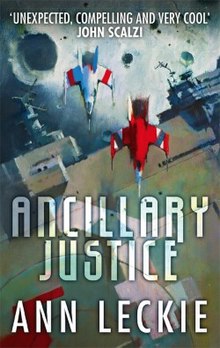
Recommended Reading: Ancillary Justice - (Anne Leckie) - Sci Fi
Usually I don't do a stand-alone review of a book, unless it really catches my attention, like Traitor's Blade or Retribution Falls.
This is one of those books.
Lately the Hugo sci fi awards have been tainted with controversy, with a voting block forming, accusing others of bias towards literary works, as opposed to entertainment. (I.e. the one high brow artsy types like as opposed to the popular sort people actually read), and "affirmative action" voting - i.e. voting to make an intellectual/ideological statement. I'm shocked! <sarcasm off>
Well, Ancillary Justice was written by a woman, and a noticeable amount of military characters are female of a gay persuasion. However that has no bearing on the story (and is not shoved in your faces like most TV shows).
Ancillary Justice simply won all those awards (Hugo, Nebula, Arthur C Clarke, Locus etc) because it is a great book. In fact, it's the best sci fi book I can recall reading since... old school stuff stuff like Ender's Game and Dune.
Why you'd read it: A soldier is on a quest for vengeance. She was once the AI of a massive military starship - the Justice of Torren - and an act of treachery has reduced her to inhabiting a single human body. But that may be enough to bring down an empire.
The AI-in-a-human-body concept is very both well-handled, believable, and oozes cool. The "ancillaries" (mindwiped humans controlled by AI aka "corpse soldiers") are a concept that would translate well to the gaming table. There's lots of gaming inspiration of a hard-ish sci fi bent.
Leckie does a great job of world-building a culture which is built on expansion, where class systems define careers, and where AIs are prevalent - a single mind can occupy multiple bodies. What appears to be a simple, cliched revenge tale is far deeper than it appears, and the dual plotlines (the present and 19 years in the past) converge and combine to peel away the layers of the story.
Whilst you can see it is leading on to a trilogy, it can be read as standalone. In an age where editors let their charges ramble for 800-900 pages without getting to the point, Ancillary Justice tells a great story in 380 (which I read in one sitting!), without ever feeling like it is dragging or dawdling. I'm getting the follow-up book Ancillary Sword next time I'm in town.
Why you'd leave it: I can't think of one.
Recommended: 5/5. Absolutely. Best sci fi book in years. Go read it now.
This is one of those books.
Lately the Hugo sci fi awards have been tainted with controversy, with a voting block forming, accusing others of bias towards literary works, as opposed to entertainment. (I.e. the one high brow artsy types like as opposed to the popular sort people actually read), and "affirmative action" voting - i.e. voting to make an intellectual/ideological statement. I'm shocked! <sarcasm off>
Well, Ancillary Justice was written by a woman, and a noticeable amount of military characters are female of a gay persuasion. However that has no bearing on the story (and is not shoved in your faces like most TV shows).
Ancillary Justice simply won all those awards (Hugo, Nebula, Arthur C Clarke, Locus etc) because it is a great book. In fact, it's the best sci fi book I can recall reading since... old school stuff stuff like Ender's Game and Dune.
Ancillary Justice is one of the best sci fi books I've read. Period.
Why you'd read it: A soldier is on a quest for vengeance. She was once the AI of a massive military starship - the Justice of Torren - and an act of treachery has reduced her to inhabiting a single human body. But that may be enough to bring down an empire.
The AI-in-a-human-body concept is very both well-handled, believable, and oozes cool. The "ancillaries" (mindwiped humans controlled by AI aka "corpse soldiers") are a concept that would translate well to the gaming table. There's lots of gaming inspiration of a hard-ish sci fi bent.
Leckie does a great job of world-building a culture which is built on expansion, where class systems define careers, and where AIs are prevalent - a single mind can occupy multiple bodies. What appears to be a simple, cliched revenge tale is far deeper than it appears, and the dual plotlines (the present and 19 years in the past) converge and combine to peel away the layers of the story.
Whilst you can see it is leading on to a trilogy, it can be read as standalone. In an age where editors let their charges ramble for 800-900 pages without getting to the point, Ancillary Justice tells a great story in 380 (which I read in one sitting!), without ever feeling like it is dragging or dawdling. I'm getting the follow-up book Ancillary Sword next time I'm in town.
Why you'd leave it: I can't think of one.
Recommended: 5/5. Absolutely. Best sci fi book in years. Go read it now.
Saturday, 11 April 2015
Book Roundup #6: Pulp, Modern
Steelheart (Brandon Sanderson) Score 3
The author who finished the Wheel of Time series (I admit I lost interest around book 6 when I realised the series was just going to be milked forever) has quite a few books of his own. This isn't his best, but it is an interesting book, where superheroes (or rather supervillains) called "epics" rule cities and territories by right of might. The hero joins the resistance, aiming to assassinate the apparently invinvible "epic" who killed his father.
Why you'd read it: A superhero story with a twist. Mr Sanderson is a capable, entertaining writer and his world building is very good. Good beginning, solid ending.
Why you'd leave it: It's a bit cliched, and quite young-adult in how it's orientated. A little cartoony (though that isn't necessarily a bad thing). Characters were uninspired and rather paint-by-the-numbers.
Ice Station (Matthew Reilly) 4 Stars
Something metallic has been discovered deep under the ice. And countries will kill to discover what it is. Basically Ice Station is a blockbuster action movie in book form. What Michael Bay would write if he was an author. Whilst not the most polished author, Mr Reilly is the most relentless, piling action set piece atop of action set piece.
Why you'd read it: First class man fuel. Goes full throttle from the start and does not let up. SAS vs French Foreign Legion vs Marines - toss in killer whales, grappling hooks and nuclear subs for the most action sequences ever packed into an airport size novel. The squad-level gun battles through the multi-level research station would make great wargaming material.
Why you'd leave it: As improbable as a Michael Bay blockbuster and about as deep in literacy merit. But a fun ride!
Emergence (John Birmingham) 3.5 Stars
An oil rig in the Gulf drills to deep, and disturbs something best left undiscovered. The creatures are hungry, and we are their prey. The author sarcastically thanks the movie "Reign of Fire" for being his inspiration. "For having a cover that suggested we'd have dragons vs gunships then not delivering" Mr Birmingham, however, delivers in spades. This has to be my surprise "sleeper" hit of this year - a book that was so much better than I expected. Really looking forward to the sequel.
Why you'd read it: Demonic orc-apes, dragons, SEALs and gunships, and a magic hammer. And a very flawed redneck who might just be the superhero to save humanity. There's bucket loads of wargaming inspiration and very much this book leads with the "rule of cool."
Why you'd leave it: It's pulpy to the extreme. The anti-hero is an exaggerated caricature of cliches. The writing is a bit clunky at times.
The author who finished the Wheel of Time series (I admit I lost interest around book 6 when I realised the series was just going to be milked forever) has quite a few books of his own. This isn't his best, but it is an interesting book, where superheroes (or rather supervillains) called "epics" rule cities and territories by right of might. The hero joins the resistance, aiming to assassinate the apparently invinvible "epic" who killed his father.
Why you'd read it: A superhero story with a twist. Mr Sanderson is a capable, entertaining writer and his world building is very good. Good beginning, solid ending.
Why you'd leave it: It's a bit cliched, and quite young-adult in how it's orientated. A little cartoony (though that isn't necessarily a bad thing). Characters were uninspired and rather paint-by-the-numbers.
Ice Station (Matthew Reilly) 4 Stars
Something metallic has been discovered deep under the ice. And countries will kill to discover what it is. Basically Ice Station is a blockbuster action movie in book form. What Michael Bay would write if he was an author. Whilst not the most polished author, Mr Reilly is the most relentless, piling action set piece atop of action set piece.
Why you'd read it: First class man fuel. Goes full throttle from the start and does not let up. SAS vs French Foreign Legion vs Marines - toss in killer whales, grappling hooks and nuclear subs for the most action sequences ever packed into an airport size novel. The squad-level gun battles through the multi-level research station would make great wargaming material.
Why you'd leave it: As improbable as a Michael Bay blockbuster and about as deep in literacy merit. But a fun ride!
Emergence (John Birmingham) 3.5 Stars
An oil rig in the Gulf drills to deep, and disturbs something best left undiscovered. The creatures are hungry, and we are their prey. The author sarcastically thanks the movie "Reign of Fire" for being his inspiration. "For having a cover that suggested we'd have dragons vs gunships then not delivering" Mr Birmingham, however, delivers in spades. This has to be my surprise "sleeper" hit of this year - a book that was so much better than I expected. Really looking forward to the sequel.
Why you'd read it: Demonic orc-apes, dragons, SEALs and gunships, and a magic hammer. And a very flawed redneck who might just be the superhero to save humanity. There's bucket loads of wargaming inspiration and very much this book leads with the "rule of cool."
Why you'd leave it: It's pulpy to the extreme. The anti-hero is an exaggerated caricature of cliches. The writing is a bit clunky at times.
Friday, 10 April 2015
Book Roundup #5: More Fantasy - Some Great Reads
I recently re-read some good 'uns - and here they are - all heartily recommended:
The Name of the Wind - Patrick Rothfuss 4.5 Stars
A coming-of-age story. But it avoids being cliche and is very well written. Avoiding the grim-dark of Abercrombie and GRR Martin but far from "high fantasy" this strikes a unique balance. Told in the heroes own voice - he was once the greatest mage and swordsman of the age, but apparently killed a king and started a war and now lives as an anonymous innkeeper.
Why you'd read it: It's simply one of the top 10 fantasy books. Period. I only deducted a star as I'm sick of waiting for the third in the series and I bet it annoys others as well.
Why you'd leave it: It's quite deliberately (i.e. slow) paced in places. Rothfuss released the sequel in 2011 but nothing since then bar the unspeakably awfulwank off vanity project Slow Regard of Silent Things.
Prince of Thorns - Mark Lawrence 5 Stars
Another gritty fantasy trilogy but a very very good one. Once a happy, privileged son of a Prince, tragedy has turned Jorg of Ancrath into a immoral, vicious boy who leads a band of outlaws. The world is bleak but interesting. The dead are rising but Jorg fears no one, living or dead - and he will sit on the Imperial Throne if he has to step over the body of every friend and foe to do it.
Why you'd read it: Very well written. Gripping story. Interesting world. A driven,yet sympathetic anti-hero. Also, it's a trilogy with a definite ending - something all to rare when authors tend to milk a cash cow series to the point of tedium. All the books are good.
Why you'd leave it: It's quite bleak, and the vicious anti-hero might not be to everyone's taste. Also, you may prefer the more likeably, roguelike hero of his new series, Prince of Fools.
The Way of Kings - Brandon Sanderson 4 Stars
Brandon Sanderson is a prolific and imaginative writer who has excellent world building skills - every series has unique magic, cultures, and legends. He has many different series and standalone books, but this is his best. It will be an epic in the Wheel of Time mold, but it's simply much much better. The Knights Radiant are gone, but their weapons and armour remain. There is a fascinating world to explore, where "spren" (small, apparently non-sentient will-of-the-wisp like beings) are attracted by abstract concepts like hate, love, glory and pain.
Why you'd read it: Imaginative world, good action, and "wow, cool" moments. This will be Sanderson's magnum opus and it shows. It's a big series, but I bet he actually finishes it. Heck, the dude finished the Wheel of Time and I thought that would never end.
Why you'd leave it: It's frickin huge! It takes hundreds of pages to get into it. I think it's totally worth it in the end, but others would disagree. The first book (singular) is about the size of the complete LOTR trilogy. Which is kind of ridiculous. Plus, Sanderson has heaps of other books you can use to "dip your toes in" with first. Apparently 10 books are planned. Yikes!
The Dragon's Path - Daniel Abraham 3.5 Stars
This isn't Daniel Abraham's best work, but it's pretty darn good. He's one of the most skilled writers out there, and his characterization is absolutely first class. There's much scheming, and it's not often that a banker is a hero. Economic warfare is not conventional fantasy! But mix in regicide, truth-seeking cultists with spiders for blood, and lost legends come to life.... The series builds rather slowly (just like Abraham's sci fi series Leviathin Wakes) but really starts to pay off in books 4 and 5 with some cool and startling revelations. It starts out plodding and gets awesome. The first book was a 3, the last one a 4.5.
Why you'd read it: You like great books, skilled writing, and don't mind waiting for your payoffs if they're good - which Abraham delivers. You like scheming as much as blood spattered action.
Why you'd leave it: You don't want to read two large books before the action heats up. Which is pretty slow paced, I admit. I initially was very disappointed with this series, and stopped at book 2, but then thought it might improve like his other series did. I was right, and I'm eagerly anticipating the next book.
Half a King - Joe Abercrombie 5 Stars
Whilst Abercrombie is pretty much my favourite author (it's like GRR Martin, but more badass - stripped back to the cool bits with less long-winded nattering and less than a zillion viewpoints) I admit he can be a bit "grim" despite having laugh-out-loud passages. Half A King dials back the grimdark a bit - which strikes a great balance. The books in the series (two so far) are standalone but subtely linked. The hero swears to regain a throne he never wanted. Born a weakling, he must use his wits in a world where viking virtues are paramount. A few interesting twists.
Why you'd read it: You'd like to try Abercrombie, but want something lighter than his usual. You want to read a great book. Humor, violence, and interesting plot twists.
Why you'd leave it: Not sure, really. Maybe because it has a teenage protagonist? Nah, not a good enough reason. Just go read it.
The Name of the Wind - Patrick Rothfuss 4.5 Stars
A coming-of-age story. But it avoids being cliche and is very well written. Avoiding the grim-dark of Abercrombie and GRR Martin but far from "high fantasy" this strikes a unique balance. Told in the heroes own voice - he was once the greatest mage and swordsman of the age, but apparently killed a king and started a war and now lives as an anonymous innkeeper.
Why you'd read it: It's simply one of the top 10 fantasy books. Period. I only deducted a star as I'm sick of waiting for the third in the series and I bet it annoys others as well.
Why you'd leave it: It's quite deliberately (i.e. slow) paced in places. Rothfuss released the sequel in 2011 but nothing since then bar the unspeakably awful
Prince of Thorns - Mark Lawrence 5 Stars
Another gritty fantasy trilogy but a very very good one. Once a happy, privileged son of a Prince, tragedy has turned Jorg of Ancrath into a immoral, vicious boy who leads a band of outlaws. The world is bleak but interesting. The dead are rising but Jorg fears no one, living or dead - and he will sit on the Imperial Throne if he has to step over the body of every friend and foe to do it.
Why you'd read it: Very well written. Gripping story. Interesting world. A driven,yet sympathetic anti-hero. Also, it's a trilogy with a definite ending - something all to rare when authors tend to milk a cash cow series to the point of tedium. All the books are good.
Why you'd leave it: It's quite bleak, and the vicious anti-hero might not be to everyone's taste. Also, you may prefer the more likeably, roguelike hero of his new series, Prince of Fools.
The Way of Kings - Brandon Sanderson 4 Stars
Brandon Sanderson is a prolific and imaginative writer who has excellent world building skills - every series has unique magic, cultures, and legends. He has many different series and standalone books, but this is his best. It will be an epic in the Wheel of Time mold, but it's simply much much better. The Knights Radiant are gone, but their weapons and armour remain. There is a fascinating world to explore, where "spren" (small, apparently non-sentient will-of-the-wisp like beings) are attracted by abstract concepts like hate, love, glory and pain.
Why you'd read it: Imaginative world, good action, and "wow, cool" moments. This will be Sanderson's magnum opus and it shows. It's a big series, but I bet he actually finishes it. Heck, the dude finished the Wheel of Time and I thought that would never end.
Why you'd leave it: It's frickin huge! It takes hundreds of pages to get into it. I think it's totally worth it in the end, but others would disagree. The first book (singular) is about the size of the complete LOTR trilogy. Which is kind of ridiculous. Plus, Sanderson has heaps of other books you can use to "dip your toes in" with first. Apparently 10 books are planned. Yikes!
The Dragon's Path - Daniel Abraham 3.5 Stars
This isn't Daniel Abraham's best work, but it's pretty darn good. He's one of the most skilled writers out there, and his characterization is absolutely first class. There's much scheming, and it's not often that a banker is a hero. Economic warfare is not conventional fantasy! But mix in regicide, truth-seeking cultists with spiders for blood, and lost legends come to life.... The series builds rather slowly (just like Abraham's sci fi series Leviathin Wakes) but really starts to pay off in books 4 and 5 with some cool and startling revelations. It starts out plodding and gets awesome. The first book was a 3, the last one a 4.5.
Why you'd read it: You like great books, skilled writing, and don't mind waiting for your payoffs if they're good - which Abraham delivers. You like scheming as much as blood spattered action.
Why you'd leave it: You don't want to read two large books before the action heats up. Which is pretty slow paced, I admit. I initially was very disappointed with this series, and stopped at book 2, but then thought it might improve like his other series did. I was right, and I'm eagerly anticipating the next book.
Half a King - Joe Abercrombie 5 Stars
Whilst Abercrombie is pretty much my favourite author (it's like GRR Martin, but more badass - stripped back to the cool bits with less long-winded nattering and less than a zillion viewpoints) I admit he can be a bit "grim" despite having laugh-out-loud passages. Half A King dials back the grimdark a bit - which strikes a great balance. The books in the series (two so far) are standalone but subtely linked. The hero swears to regain a throne he never wanted. Born a weakling, he must use his wits in a world where viking virtues are paramount. A few interesting twists.
Why you'd read it: You'd like to try Abercrombie, but want something lighter than his usual. You want to read a great book. Humor, violence, and interesting plot twists.
Why you'd leave it: Not sure, really. Maybe because it has a teenage protagonist? Nah, not a good enough reason. Just go read it.
Friday, 27 February 2015
Book Roundup #4: Modern Fantasy
The term modern fantasy (or 'urban fantasy') tends to make me shudder when I see it in a bookstore. 90% of the books are romances of a lower calibre than Mills & Boon, simply with vampires/werewolves/angels/elves/insert-your-fantasy-trope-here to allow kinky sex scenes.
However it's not all bad. Although some are a stretch to fit in the modern fantasy genre, here are a sample of decent books I can recommend:
Why you’d leave it: Rather inaccessible – can be confusing at
times. The author does not coddle the
reader, and has an unusual style.
However it's not all bad. Although some are a stretch to fit in the modern fantasy genre, here are a sample of decent books I can recommend:
Night Watch by Sergei Lubaynenko 3.5 Stars
Light and dark sorcerers maintain a Cold
War-style truce, maintaining a balance between good, and chaos. Each side has a group of sorcerers (“Others”)
who oversee the others – the Night Watch are Light magicians responsible for
policing dark others like vampires, werewolves etc. It is a massively popular Russian series
which, pleasantly, avoids the usual clichés.
This series is an enjoyable change of pace from the usual urban fantasy. There is actually a very good movie that goes
with it – but I recommend you read the book first or you may not grasp what is
going on.
Why you’d read it: An excellent urban fantasy with an
interesting take on a rather tired genre.
The books (at least the first) work as standalone. However the “Twilight” (a series of dimensions
where Others can walk/draw their power) had a very cool “reveal” about it in a
later book.
Why you’d leave it: It has a very European style of writing and
may be a bit different in its style and ‘voice’ to mainstream novels. The books are a hefty ~500 pages. Whilst I really enjoyed the first few books,
I became a bit jaded by the series end (book 5).
Blood Oath: The President’s Vampire by
Chris Farnsworth 3.5 Stars
This reminds me a of a Hellboy ripoff – a young White House staffer becomes the handler of
a 100-year old vampire who serves the United States. It even comes with a
secret-base-under-the-Smithsonian. That
said, this is a surprisingly good series, and the author gets better with every
book. I like how he weaves myths and
conspiracy theories through the series.
Why you’d read it: Because you’d like to know what REALLY
happened at Innsmouth (spoiler: involves vampire and secret service with
flamethrowers); how Osama Bin Laden actually died, and where Dr Frankenstein is
living today.
Also, you liked Hellboy.
Why you’d leave it: You’re as sick of
vampires as you are of zombies, even if the vampire is more a blood-spattered
superhuman secret assassin. The author is no Hemingway, though he is quite good
and improves with each book.
The Devil You Know by Mike Carey 3.5 Stars
This is the most ‘conventional’ of my round-up; a
detective who can whistle up ghosts.
It’s perhaps typical of its kind, but the author is a Hellblazer(Constantine) comic writer who
has proved very adept at novels, and in fact has some outstanding books in
different genres. It’s more
“British” than the usual urban fantasy
fare, and there is a distinct lack of succubi, vampires and werewolves.
Why you’d get it: A “British” Harry
Dresden. If you prefer British movies and comedy over the US equivalent, this
is for you.
Why you’d leave it: You find the whole “supernatural sleuth”
cliché tired, no matter who is writing it.
The Girl with All the Gifts by Mike Carey 4
Stars
This is a weird but excellent book. I’m not
sure what genre it fits in. It’s like 28 Days Later (but with fungal zombies) meets
Roahl Dahl’s Matilda. For once I agree with the hyperbole on the
dust jacket – “warm, surprising, chilling, enigmatic, unexpectedly poignant,
gripping.” In fact I’ll quote from it:
“Every
morning, Melanie waits in her cell to be collected for class. When the come for
her, Sergeant Parks keeps his gun pointing at her while two of his people strap
her into the wheelchair. She thinks they don’t like her. She jokes that she won’t bite. But they don’t
laugh.”
Why you’d read it: This borrows from a range of books, games and
movies yet makes something unique, compelling and original. For once, the critics are right.
Why you’d leave it: Because you are sick of
zombies, no matter how uniquely they are packaged. And
you like by-the-numbers, predictably familiar books by Dan Brown or Mills &
Boon.
Bitter Seeds (The Milkweed Trypych) by Ian
Tregillis 3.5 Stars
Weird War II. Nazi psychics with superhuman powers battle
British warlocks using blood sacrifice to summon “Eidolons” - demons from
another dimension.
Interested?
The series expands into the Cold War before concluding in a bittersweet
third book. This is definitely a spy
book with a twist. Sometimes, the sacrifice necessary to defeat evil can be as
terrible as losing to it.
Why you’d read it: A well-written Weird War
II book? That’s as unusual as good
Twilight fanfiction. Grab it while you
can. It’s quite gritty and “realistic” –
so far as the subject matter allows. The
characters are flawed and believable.
Why you’d leave it: It’s quite dark and unrelentingly grim. I felt like I needed to get out into the
wholesome sunshine after reading it.
Pashazade (Arabesk Trilogy) By John
Courtney Grimwood 3.5 Stars
This is a kind of alternate history, where
WW1 never happened and the Ottoman Empire exists in the 21st
century. A detective story set in
Alexandria (which is a kind of spy Casablanca), with an enigmatic main
character (genetically/drug enhanced, and accompanied by a hallucinatory fox)
who must clear his name of murder. The
story is intercut with flashbacks. A
fascinating, unusual book set in a rich world.
Why you’d read it: If you like your
detective books with a dash of the unusual (cyberpunk Arabia + alternate
history.) The author is probably the
most talented of the books recommended on this page
Tuesday, 3 February 2015
Book Roundup #3: Science Fiction
I've noticed a tendency for authors to have "fanboys" just as much as videogames or wargames. I feel these over-exaggerate their review scores. Admittedly this is from someone who views Harry Potter as solid but hugely overrated, and thinks Tolkien merely average (great world building but non-existent plotting) so perhaps I have my grumpy hat on. Anyway, time for the next selection:
Leviathan Wakes (James A Corey) Score 3.5
This is the pen name of Daniel Abraham, a very talented fantasy writer known for his excellent prose and rather slow-burning style, in collaboration with GRR Martin's assistant Ty Franck. A Firefly-esque bunch of miners lead by an idealistic captain and smart-mouthed crew discover a derelict ship - and a deadly secret. A world-weary detective is tracking a missing girl. Galactic conflict ensues, and a terrible threat to humanity is revealed.
Why you'd read it: Good writing, a well-thought-out plot, setting and characters. Space opera meets noir detective thriller. Characters have tough choices - and sometimes make wrong ones.
Why you'd leave it: It's 600 pages long, and the pace only picks up in the last 50 or so. Though it was well-written, I found it hard to get invested in the book. I feel this series only really kicks off with the sequel Caliban's War - and that's a huge time investment.
Eisenhorn (Daniel Abnett) Score 3.5
Most Warhammer 40,000 books read like a bad internet fanfic written by a teen. Dan Abnett bucks the trend and is actually a reasonably competent writer. The Eisenhorn trilogy (Xenos, Malleus, Hereticus) is arguably his best work for the Black Library (and has the distinction of being the only Black Library book I've read twice). A detective story of sorts, about a Inquisitor (basically a morally ambiguous Jack Bauer meets Sherlock Holmes meets Judge Dredd with an energy sword) and his team who hunts down chaos cults throughout the galaxy. Gothic space opera fantasy.
Why you'd read it: You don't even need to know anything about Warhammer to enjoy this book. It's a decent sci fi novel on its own, and makes me feel a bit sorry for the other 40Khacks tie-in writers. The individual books are shortish (250 pages) and good pulpy fun. First class man fuel.
You'd leave it: Because you'd be embarrassed to be caught reading a book based on a miniatures game. Whilst initially impressed, by the third book it feels a bit same-y. It also ends a bit abruptly. Whilst Abnett isn't your usual Black Library hack, his language and writing is a bit ropey in places. Abnett also overuses. Short sentences. For dramatic. Action scenes.
Risen Empire (Scott Westerfeld) Score 3.5
An Imperial frigate captain must rescue the Child Empress, sister of the immortal undead God-Emperor who has been worshipped for milennia. The enemy: cyborgs who worship AI hiveminds. It sounds corny, but here's the surprising bit - it's hard, hard sci fi. Time dilation impacts politics and space combat - which is among the most "realistic"and "relatavistic" I have come across. Most technology is extrapolated from stuff we have today.
Why you'd read it: This will be a pleasant surprise. A great deal of thought has gone into the combat and technologies and it's an interesting variation on the undead Emperor trope. Huge imagination and scope. I'd compare it to Dune and Lord of the Rings. It's unique.
Why you'd leave it: It cuts off abruptly - it needs its sequel and I'd strongly recommend you get the omnibus version. It's a bit too focussed on technologies, and moral concepts and left me feeling a bit - disengaged? A bit too much tech, too little character building. There were also a lot of different 'points of view.' It's hard-sci focus probably won't appeal to the Star Wars/Star Trek crowd. Also, the big secret isn't that big.
Dauntless (Jack Campbell) Score 3.5
Epic space warfare, between two great space empires. An officer, rescued from a lifepod after a century-long hibernation finds he must lead a trapped fleet to victory. Huge fleet battles? Reluctant hero? Interesting battle scenes? Check. The teacher in me cringes at the writing style but my inner wargamer rejoices. A guilty pleasure.
Why you'd read it: Great fleet battles that seem epic in scope but make you care for each ship. Entertaining, kick-ass space opera. I enjoy the factor relativity/lightspeed has on tactics - it would make a very interesting wargame. Easy reading with a bit of a 50s style to it. Probably my favourite space battles.
Why you'd leave it: Wooden, cliche characters. The writing has a lot of telling, and not enough showing. The book spends a lot of time talking about concepts of honour and morality, and how the war has become less "honourable" in the century since the hero was in cyro-sleep - interesting, but repeated so as to be tiresome and artificial. The hero broods and overthinks things a bit much. You can tell it's going to be spun out into a series.
Leviathan Wakes (James A Corey) Score 3.5
This is the pen name of Daniel Abraham, a very talented fantasy writer known for his excellent prose and rather slow-burning style, in collaboration with GRR Martin's assistant Ty Franck. A Firefly-esque bunch of miners lead by an idealistic captain and smart-mouthed crew discover a derelict ship - and a deadly secret. A world-weary detective is tracking a missing girl. Galactic conflict ensues, and a terrible threat to humanity is revealed.
Why you'd read it: Good writing, a well-thought-out plot, setting and characters. Space opera meets noir detective thriller. Characters have tough choices - and sometimes make wrong ones.
Why you'd leave it: It's 600 pages long, and the pace only picks up in the last 50 or so. Though it was well-written, I found it hard to get invested in the book. I feel this series only really kicks off with the sequel Caliban's War - and that's a huge time investment.
Eisenhorn (Daniel Abnett) Score 3.5
Most Warhammer 40,000 books read like a bad internet fanfic written by a teen. Dan Abnett bucks the trend and is actually a reasonably competent writer. The Eisenhorn trilogy (Xenos, Malleus, Hereticus) is arguably his best work for the Black Library (and has the distinction of being the only Black Library book I've read twice). A detective story of sorts, about a Inquisitor (basically a morally ambiguous Jack Bauer meets Sherlock Holmes meets Judge Dredd with an energy sword) and his team who hunts down chaos cults throughout the galaxy. Gothic space opera fantasy.
Why you'd read it: You don't even need to know anything about Warhammer to enjoy this book. It's a decent sci fi novel on its own, and makes me feel a bit sorry for the other 40K
You'd leave it: Because you'd be embarrassed to be caught reading a book based on a miniatures game. Whilst initially impressed, by the third book it feels a bit same-y. It also ends a bit abruptly. Whilst Abnett isn't your usual Black Library hack, his language and writing is a bit ropey in places. Abnett also overuses. Short sentences. For dramatic. Action scenes.
Risen Empire (Scott Westerfeld) Score 3.5
An Imperial frigate captain must rescue the Child Empress, sister of the immortal undead God-Emperor who has been worshipped for milennia. The enemy: cyborgs who worship AI hiveminds. It sounds corny, but here's the surprising bit - it's hard, hard sci fi. Time dilation impacts politics and space combat - which is among the most "realistic"and "relatavistic" I have come across. Most technology is extrapolated from stuff we have today.
Why you'd read it: This will be a pleasant surprise. A great deal of thought has gone into the combat and technologies and it's an interesting variation on the undead Emperor trope. Huge imagination and scope. I'd compare it to Dune and Lord of the Rings. It's unique.
Why you'd leave it: It cuts off abruptly - it needs its sequel and I'd strongly recommend you get the omnibus version. It's a bit too focussed on technologies, and moral concepts and left me feeling a bit - disengaged? A bit too much tech, too little character building. There were also a lot of different 'points of view.' It's hard-sci focus probably won't appeal to the Star Wars/Star Trek crowd. Also, the big secret isn't that big.
Dauntless (Jack Campbell) Score 3.5
Epic space warfare, between two great space empires. An officer, rescued from a lifepod after a century-long hibernation finds he must lead a trapped fleet to victory. Huge fleet battles? Reluctant hero? Interesting battle scenes? Check. The teacher in me cringes at the writing style but my inner wargamer rejoices. A guilty pleasure.
Why you'd read it: Great fleet battles that seem epic in scope but make you care for each ship. Entertaining, kick-ass space opera. I enjoy the factor relativity/lightspeed has on tactics - it would make a very interesting wargame. Easy reading with a bit of a 50s style to it. Probably my favourite space battles.
Why you'd leave it: Wooden, cliche characters. The writing has a lot of telling, and not enough showing. The book spends a lot of time talking about concepts of honour and morality, and how the war has become less "honourable" in the century since the hero was in cyro-sleep - interesting, but repeated so as to be tiresome and artificial. The hero broods and overthinks things a bit much. You can tell it's going to be spun out into a series.
Thursday, 29 January 2015
Book Roundup #2: Fantasy with a Twist
These are books who put a twist on the usual fantasy genre. They often "crossover"with other genres like westerns, detective noir or pulp. If you are tired of noble heroes, impossibly beautiful princesses and mighty dragons you might try:
Red Country/The Heroes/Best Served Cold (Joe Abercrombie) Score 5 Stars
Whilst his initial trilogy is probably the best entry into his work, his standalone books are his best; each one a mimicry of a genre: war movie, a western and a revenge thriller respectively. He takes sly digs at fantasy tropes and his characters are interesting shades of grey. His crippled torturer antihero Sand dan Glotka is more interesting than Game of Thrones' Tyrion.
You'd take it: The best writer of grimdark realistic fantasy going; with interesting plots, great characterization and dialogue. A much tighter writing style than the somewhat bloated prose of GRR Martin.
You'd leave it: His somewhat dry grim tone can get wearing if you binge-read 3-4 books in a row, which you'll probably end up doing.
Nights of Villamanjur (Mark Charon Newton) Score 3 Stars
A rumel (nonhuman, reptilian?) investigator will discover a web of corruption leading into the heart of a dying empire.
You'd take it: Interesting ideas, themes and concepts. Banshees, birdlike garuda and rumel share a world with humans. Human hybrids and monsters stalk the streets. An otherworldly enemy approaches.
You'd leave it: A little on the weird side (China Melville-style). I only read 3 of the 5 books so I wasn't that enthused.
The Black Company (Glen Cook) Score 3 Stars
A bit of a cult classic, one of the original "gritty" fantasy novels about an elite mercenary company. Very down to earth, it is more a war documentary as told through the eyes of soldiers than a epic fantasy. Reading it is a bit like a box of chocolates - there is some dodgy flavours of chocolate but some good stuff too. Personally, I thought it was OK but not as amazing as I'd expected.
You'd read it: A weird modern classic that arguably launched the gritty fantasy genre. It has a realistic feel as the author was a Vietnam vet. There are many shades of grey - and no true heroes or villains.
You'd leave it: The writing is sloppy, choppy and has inane dialogue. It adds to the "realism" I guess, but can grate at times.
The Last Wish (Andre Sapkowski) Score 3.5 Stars
Tolkien who? This is the first collection of Witcher short stories, and in Eastern Europe Sapkowski stands above Tolkien and GRR Martin. Based on slavic mythology, some of his stories echo traditional fairy tales - I particularly liked the alternate version of Beauty & the Beast.
You'd take it: A unique style. The short stories are standalone, but if you enjoy the series 3 others are translated into English. A master of gritty fantasy, with a unique "voice."
You'd Leave it: The translation work missed the mark a bit at times.The other full-length books are even worse.
The Straight Razor Cure (Daniel Polansky) Score 3.5
The 'hero' is a disgraced intelligence agent, a sort of a 40K Inquisitor/secret policeman who has quit and become a drug dealer and local criminal boss. However when local children are found murdered, he plays a double game against his former intelligence bosses and the local underworld to find the murderer.
You'd take it: Hustlers, pimps, turf wars, corruption. Hard-boiled noir thriller, with a "twist" ending. Reasonable length book that works as a standalone and as the first in a trilogy.
You'd leave it: The drug-dealing antihero pushes the gritty boundaries. The book is a bit of a mishmash of ideas and is occasionally a bit sloppy.
The Lies of Locke Lamora (Scott Lynch) Score 4
Basically a medieval-fantasy heist movie set in not-Venice. Oceans 11 with swords. Gentleman con-artists fight to take over the local underworld.
You'd take it: The book is clever and witty and the world is well done. You like Oceans 11 and The Godfather, and you think mixing them with sorcery and Renaissance Venice would make them even cooler. You like good dialogue and plotting.
You'd leave it: You don't like the use of the f-word. The book has a bit of a "soft patch"early on.
Retribution Falls (Chris Wooding) Score 4.5
A glorious mish mash of tropes. Awesome airship battles, fighter planes, golems, undead, dune buggies. Six guns, sword fights and demonologists. It has the rag-tag pirate crew lead by a captain with a heart of gold. The author had fun writing this book, and strings cliches together in a polished way. Firefly meets Pirates of the Caribbean meets Stardust meets Indiana Jones meets The Last Exile meets Crimson Skies. A solidly written fantasy in an engaging world. Will not win a Pulitzer Prize but neither did Star Wars. Good old fashioned fun, which raises the bar in the pulp genre.
You'd take it: A swashbuckling romp full of pulpy goodness. No deep concepts - pure escapism. Easy to read, and if you enjoy it you can follow more adventures in the 4-book series.
You'd leave it: If you have no sense of fun. If you hate pulp/steampunk. If you only like serious highbrow arty books (like the stuff in high school everyone else thought was boring.)
Red Country/The Heroes/Best Served Cold (Joe Abercrombie) Score 5 Stars
Whilst his initial trilogy is probably the best entry into his work, his standalone books are his best; each one a mimicry of a genre: war movie, a western and a revenge thriller respectively. He takes sly digs at fantasy tropes and his characters are interesting shades of grey. His crippled torturer antihero Sand dan Glotka is more interesting than Game of Thrones' Tyrion.
You'd take it: The best writer of grimdark realistic fantasy going; with interesting plots, great characterization and dialogue. A much tighter writing style than the somewhat bloated prose of GRR Martin.
You'd leave it: His somewhat dry grim tone can get wearing if you binge-read 3-4 books in a row, which you'll probably end up doing.
Nights of Villamanjur (Mark Charon Newton) Score 3 Stars
A rumel (nonhuman, reptilian?) investigator will discover a web of corruption leading into the heart of a dying empire.
You'd take it: Interesting ideas, themes and concepts. Banshees, birdlike garuda and rumel share a world with humans. Human hybrids and monsters stalk the streets. An otherworldly enemy approaches.
You'd leave it: A little on the weird side (China Melville-style). I only read 3 of the 5 books so I wasn't that enthused.
The Black Company (Glen Cook) Score 3 Stars
A bit of a cult classic, one of the original "gritty" fantasy novels about an elite mercenary company. Very down to earth, it is more a war documentary as told through the eyes of soldiers than a epic fantasy. Reading it is a bit like a box of chocolates - there is some dodgy flavours of chocolate but some good stuff too. Personally, I thought it was OK but not as amazing as I'd expected.
You'd read it: A weird modern classic that arguably launched the gritty fantasy genre. It has a realistic feel as the author was a Vietnam vet. There are many shades of grey - and no true heroes or villains.
You'd leave it: The writing is sloppy, choppy and has inane dialogue. It adds to the "realism" I guess, but can grate at times.
The Last Wish (Andre Sapkowski) Score 3.5 Stars
Tolkien who? This is the first collection of Witcher short stories, and in Eastern Europe Sapkowski stands above Tolkien and GRR Martin. Based on slavic mythology, some of his stories echo traditional fairy tales - I particularly liked the alternate version of Beauty & the Beast.
You'd take it: A unique style. The short stories are standalone, but if you enjoy the series 3 others are translated into English. A master of gritty fantasy, with a unique "voice."
You'd Leave it: The translation work missed the mark a bit at times.The other full-length books are even worse.
The Straight Razor Cure (Daniel Polansky) Score 3.5
The 'hero' is a disgraced intelligence agent, a sort of a 40K Inquisitor/secret policeman who has quit and become a drug dealer and local criminal boss. However when local children are found murdered, he plays a double game against his former intelligence bosses and the local underworld to find the murderer.
You'd take it: Hustlers, pimps, turf wars, corruption. Hard-boiled noir thriller, with a "twist" ending. Reasonable length book that works as a standalone and as the first in a trilogy.
You'd leave it: The drug-dealing antihero pushes the gritty boundaries. The book is a bit of a mishmash of ideas and is occasionally a bit sloppy.
The Lies of Locke Lamora (Scott Lynch) Score 4
Basically a medieval-fantasy heist movie set in not-Venice. Oceans 11 with swords. Gentleman con-artists fight to take over the local underworld.
You'd take it: The book is clever and witty and the world is well done. You like Oceans 11 and The Godfather, and you think mixing them with sorcery and Renaissance Venice would make them even cooler. You like good dialogue and plotting.
You'd leave it: You don't like the use of the f-word. The book has a bit of a "soft patch"early on.
Retribution Falls (Chris Wooding) Score 4.5
A glorious mish mash of tropes. Awesome airship battles, fighter planes, golems, undead, dune buggies. Six guns, sword fights and demonologists. It has the rag-tag pirate crew lead by a captain with a heart of gold. The author had fun writing this book, and strings cliches together in a polished way. Firefly meets Pirates of the Caribbean meets Stardust meets Indiana Jones meets The Last Exile meets Crimson Skies. A solidly written fantasy in an engaging world. Will not win a Pulitzer Prize but neither did Star Wars. Good old fashioned fun, which raises the bar in the pulp genre.
You'd take it: A swashbuckling romp full of pulpy goodness. No deep concepts - pure escapism. Easy to read, and if you enjoy it you can follow more adventures in the 4-book series.
You'd leave it: If you have no sense of fun. If you hate pulp/steampunk. If you only like serious highbrow arty books (like the stuff in high school everyone else thought was boring.)
Subscribe to:
Posts (Atom)