Showing posts with label Rules Review. Show all posts

Sunday, 9 April 2023

Battletech Alpha Strike Box Set (Rules Review)

The Package: "One of the best and most complete box sets I've seen - it has it all, for a good price."

The Rules: "If you have to add lots of house rules to make it good - it's not good."

/post

The Shiny

I'll start with the contents of the box, so the true Battletech nerds can then skip the rest where I nitpick the rules and possibly hurt their feels. 

The miniatures are that dodgy 3D-printer-y plastic not the good stuff, but the 13 models you get are all pretty decent and paint up pretty easily. I've only done a very fast job on mine and they look good on the table. You get plenty of dice, nice thick card markers and trees and plenty of rather nice houses for terrain. You can get playing right out of the box. 

The rulebook is unfortunately but unsurprisingly a 'starter' rulebook - you have to shell out for the full rules - but it's easy to use and nice to look at. You also get quick-reference cards and stuff as well as stats cards for all the mechs in the box. I laminated my mech cards so I can use whiteboard pens on them but you can also make them online.

It's a very nice box of toys for $120AUD ($80 freedumbucks) but I'm not really enthusiastic to play it because of.... 

The Rules

An unsuccessful attempt to simplify a bloated 1980s quasi-RPG makes questionable choices. I was constantly thinking not "this is cool" but "this x could be changed to y". As the quick-play game this was a lost opportunity to update the clunkiness. The Battletech rules could have been kept the same to appeal the hardcore BT nerds and their rose-tinted glasses, but Alpha Strike could and should have been modernised to increase its accessibility.

What you need

Each mech comes with a unit card which tracks damage to armour/structure, heat and critical hits along with stats like speed, firepower in each range band, special abilities and points cost.  It gives 5 'missions' and explains how to fairly set out terrain (a welcome addition too few rules do). It then goes into a fair bit of detail of how each piece of terrain works - I'm not sure this is the place in the book for the terrain rules though - and how to set up and start. 

Initiative & Order of Play

Players roll off for initiative and the players then alternate moving. Each side then shoots ALL their mechs, then the other side shoots ALL their mechs. Damage is applied immediately doesn't take effect til both have fired so you get to shoot back before you are destroyed. While nice in theory, the combat sequence seems a bit clunky to track. It'd make more sense to allow sequential firing and just implement damage instantly (perhaps in order of pilot skill - perhaps you could then tie movement order to mech size/agility (aka TMN) making lights even more useful?

Combat

While firing arcs and flanking matters (good), it's still a very detailed and involved process for a fast-play entry game (19 modifiers!). You need to track attacker and defender movement, as well as the usual range/cover. Making things more Battletech-y, you can spend heat (which you need to track) to boost damage. 

I dislike the 2D6 bell curve as it can be 'gamed' - not all modifiers are worth the same. A switch to d10 or d12 would improve the game. If you go 'past the curve' or fall short of the curve it can make a big difference i.e. d10 = 10%, 20%, 30% etc is a flat 10%; 2d6 = 3%, 8%, 17%, 27%, 42%, 58%, 72% etc - the gaps vary in size making modifiers more or less valuable at certain points; a +2 modifier on d10 would be a reliable 20% but could fluctuate between 30% or 11% on 2d6 depending on where it is on the curve. There's a place in gaming for 2D6 - but this isn't it.

The flat damage i.e. weapons deliver an all-or-nothing set damage chunk at certain range bands (i.e. firepower 5 mechs do 5, firepower 7 mechs do exactly 7HP damage) which is weird; they even have their own modified rules in the book - but this modified rule means you roll individually for each point of damage (slow/clunky using 2d6 each time) and this has further effects such as disadvantaging lights; which are more vulnerable to smaller but more frequent 'chip' damage. As expected the 2d6 complicates the odds as well and makes the knock-on effect of house rules less obvious.

The move/shoot ranges also seem a bit off but that may just be my experimenting on a 4x4' table.

Despite my dislike of hitpoints they are pretty reasonable in Alpha Strike and fit the feel of the game, as does the critical hits. A sensible level of abstraction to speed things up while retaining a Battletech feel.

Lights are harder to hit (higher base 'to hit' aka TMN) - which is good and gives them some survivability - but you'd need to wisely sprint/jump/have plenty of table cover to 'manage' the 2d6 curve to make them worthwhile.

Overall, the whole combat section feels like a dodgy homebrew adaption of the original 80s rules and would benefit from being ripped up and redone completely fresh. I know there are a plethora of house rules about trying to 'fix' this (heck even these starter rules even have 'house rules' in them) but if your rules need house rules to be good - they aren't good. To compound this, Alpha Strike seems to be lacking the character of OG Battlemathtech. It's too generic and bland. It's probably fun when you add in all the extras like aircraft, tanks and infantry but when you get to a bigger battles (12-16 or so, with all the 'extras') it wouldn't actually be that fast.

Heat & Other Stuff

I do like heat rules (it makes mechs play/feel different than just big infantry). Heat is used to boost damage. The rules are simple and easy to remember - reduce -2" and and 1 penalty to hit each heat level etc.  A shutdown mech is -4 to be hit; which seems a bit extreme a penalty. 

There is some special mech traits and rules for force building. Formations may be designated by role (assault, fire support, recon, command etc) which can give bonuses and also determines the type of mech that can be included. Mechs have point values which seem reasonable from my limited knowledge but I strongly suspect how much cover is on the table would impact the value of many mechs.

There is rules for climbing, destroying and collapsing buildings and calling in artillery and airstrikes off-table. This section is obviously missing a lot from the full rules, and it is a little disappointing infantry and vehicles are not included. 

Given how much work the Alpha Strike rules seem to need to be decent, I think shelling out another $80AUD for the 'proper' rulebook (2/3rd the cost of the entire box set!) feels like a sunk cost fallacy.

The models scale well with 6mm sci fi...

TL:DR - "Yes to the mechs, meh to the rules"

For the price the box set is a very complete package at a reasonable price - 13 mechs, terrain, dice, rules and I'd recommend it as decent value if even you only have a cursory interest in mech combat. It's one of the best box sets I've seen in a while, actually.

However the rules themselves feel like a hasty band-aid adaption to speed up the ancient 1980s Battletech rules and seem to invite a fair bit of house-rules which is not what you want when introducing newcomers. It feels like it's lost a lot of BT flavour and still feels pretty awkward. With its rich history and lore BT seems well positioned to hoover up discontented 40K refugees, but as a starter/entry to Battletech, Alpha Strike seems like a missed opportunity to modernize and streamline - you always have the OG Battletech rules for those with well-tinted nostalgia goggles. 

Friday, 3 February 2023

Ragnarok: Heavy Metal Combat in the Viking Age (Rules Review)

A campaign skirmish game. With vikings. Using epic god powers and pulling off awesome moves. Viking Mordhiem?  Sounds epic. I've actually struggled to find reviews or much online on this (a bit from a few years back, then it seems to vanish off the radar, despite sequels), so I thought I'd share my thoughts.

The Shiny

The book is a very nice, glossy hardcover. 205 pages, of which about 20 pages are the actual rules. It has a decent mix of artwork and mini photos and the text is easy to read. There is a nice index and I found it pretty easy to navigate. The lore was interesting but not intrusive. I feel it was good production value/cost. Thumbs up.

Overhead "What you need to have/know"

One criticism is the use of "stats" named HP, SP, MA, RA, DF, RS, DR, MN - mentioned through the book. There is an explanation on p.24, but I often had to flip back as it wasn't instantly intuitive what stat "RS" referred to, for example, or why "DR" or "MN" should be effected by x. "DF" is ability to avoid hits, not toughness to resist once hit - that's "DR." I'd prefer they were labelled Health, Speed, Melee, etc throughout the rules - it's only using a few more letters in a 205 page rulebook, and would make things much easier to use.  

It uses the somewhat pretentiously-named "Morpheus System" - basically rolling a 7+ on a 2d6, but modifying it based on stats of both sides i.e. a Attack 5 vs a Defence 7 would modify the usual 7+ success roll to be a 9+ as the negative -2 between the respective stats raises the target number to make success harder. I've used 'stat difference changes target roll' for years (only with 5+ on a d10 or 4+ on d6) but never thought to call it the "Monkeigh Engine." That aside, using the same resolution consistently through a ruleset is a good thing. You only need 2d6, and a d8 for random scatter stuff.

The game is miniatures agnostic, so my Gripping Beast and PSC vikings will be supplemented by some Frostgrave barbarian boxes, I predict, along with LoTR trolls, dwarves and goblins filling in various norse mythology roles. There is actually dozens of unit and creature profiles so finding random models to match may be fun or stressful depending on how you view it.

Activation & Initiative, Movement

The now industry-standard alternate activation, taking turns moving individual models, with the side with superior numbers continuing to move once the smaller side runs out of minis to move (I'm not a huge fan of this as it can make big horde armies tactically superior). Fine, I guess, but a bit dull. Minis get "action points" which gives me a real 1990s-early 2000s vibe. Actions are very detailed. There are detailed rules for falling, climbing etc as you'd expect.

For example: Going prone may -3 SP, -1MA, -1 size, -1RA vs them to hit, and +1MA vs them to hit  

^^ It gives a bit of an old-school RPG feel and feels a bit obtuse and overly detailed. Kinda fiddly - a lot of little things to keep track of that may not be that vital.

There is a fair bit on terrain - from thin ice to thorn forests - the intent is to allow you to throw enemies off cliffs or into spikes and stuff like that.  

Combat

Melee and ranged works similarly, which is good. You compare relevant stats (MA/RA vs DF) and modify the target score from 7+. The level of success may inflict extra hits or have extra effects. Then, compare attack ST vs target RS. Despite the "HP" stat this is only 2-3 "HP" for most models so is no different from "wounds" in other games - you could track it with red paint blood spatters on some clear tokens on the tabletop. Models have 360d LoS; restricting this to 180d would allow more tactical possibilities for flanking/surprise etc. 

Melee has some variety (good) - before you just shove minis together and chug dice you have some choices, such as "clash" - counter-attacking possibly getting in a first blow but opening yourself up to be more easily hit. There is also a "MR" - a 2" kinda zone of control which adds some depth. Ranged attack has blast, line(beam) and spray attacks (covering magic and beasts).

Mechanics can be a bit over-detailed and fiddly but are consistent.  I didn't notice much in the way of morale rules but perhaps heroic vikings kinda ignore that.

Campaigns Godspark (Magic) & Special Rules (aka the majority 150+ pages of the book)

From page 47 on, the remaining 150+ pages is devoted to campaign rules, scenarios, weapon and gear lists, special traits/attacks/abilities and god powers (magic) and a bestiary. It really has strong RPG overtones. 

There are rules for creating your own war clan with jarl, bondi, huskarls, skalds, beserkers, speider and gothi. As they are all human vikings they are all kinda samey. They can be equipped with the usual viking-y axes, spears, shields, leather, chainmail etc but the real difference is Godspark - as different warbands get access to different powers (either by choice or random roll).

Godspark is the "god powers" or magic system, and is generated when any roll exceeds the target number i.e. if you need a 7+ and roll a 10, you get 3 Godspark. it seems cool but I'm wondering if (a) this will incentivize a big "pile in" fight in the middle to maximise generation of Godspark and (b) it makes lucky dice rolling even stronger and making it harder to recover from early game bad rolls i.e. you are punished twice - your opponent got a good roll to hurt you and melee AND now has extra magic to beat you with further...

That said it does add an element of resource management - another 'layer' to the game, which is good. However tracking/adding Godspark pretty much every roll could become a bit tiresome.

There are about 40 God Powers which sounds quite a lot as they all trigger further special rules/effects/traits, however each warband has access to only 3 which makes it more manageable in practice.

These God Powers link to specific norse gods - so Balder's powers allow you to heal wounds, while Thor's powers allow channelling electrical shock attacks. Having a read through I'm not confident they are well balanced; some seem much stronger than others. So I'd suggest they are randomly assigned as there'd be a temptation to min-max.

There is a very thorough campaign section where you can level up warriors, gain glory, check injuries, roll for loot, purchase new gear, weapons and God powers etc. Many modern skirmish rules skimp on this section with barebones campaigns but Ragnarok is the real deal. There is equipment, magic items to buy, a detailed injury table, legendary weapons and detailed rules on levelling up warriors and God Powers. (Basically, the God Powers get cheaper to cast, until the cost reaches 0 and it is imprinted on a particular warrior - i.e. is free but cannot be used by everyone else in the warband any more)

You can recruit new warriors, but interestingly, only recruit special heroes and beasts if you have defeated them in battle (i.e. as random encounter). There is only 6 scenarios (I say "only" but that is probably because the rest of this section is so thorough) but there are 12 secondary objectives that modify them for more variety. There are also random "encounter models" which randomly deploy from a pool of models they players determine before the game - once defeated, you can recruit them. There is also a mechanic for helping warbands 'catch up' if they are behind.

There is a large bestiary (80~) of monsters and races, from dwarves, and swartelves, to dragons, hags, draugr, demons, direwolves - basically a roll-call of norse mythological critters.

Finally there are 70+ special abilities or traits, from attacks like toxin, drain, blind - to 'absent minded' healer, delusional, regeneration.  This whole huge section gives real RPG vibes and I found myself mentally comparing it to "Savage Worlds" - my usual go-to "RPG-cum-skirmish-game." Based on the contents of this rulebook, I'm confident the author is an avid RPG-er.

TL:DR

A very nice rulebook which was easy to access, but obscure stats (MN, DR, RA) and key words were not always obvious so I had to spend time backtracking/checking. Rules were somewhat fiddly and had an old-school 1990s feel (which may appeal to some). Not as accessible as I'd hoped. 

Very detailed Mordheim-esque campaign with injuries, gear and tables; and big bestiary and magic list. The last 150 pages could have come from a RPG book like Savage Worlds. Plenty of chrome, "Godspark" adds an interesting (if potentially unbalanced) layer and the book has a cool theme and world-building. 

Ragnarok has happened - but not the way we thought. Vikings fighting for "essence" of dead gods in the ruins of the world? It's got a good theme for sure.

Recommended? Yes. Not a resounding yes, but yes.

I could probably replicate everything in it using Savage Worlds at about the same speed, for half the price...  ....but it does what it says on the tin, and has (for once) a proper skirmish campaign and trimmings. It's decent value for a quality book. It's not amazing or revolutionary, but I have no regrets of my purchase - and while I suspect I won't play it much, I'll certainly be making some viking warbands. It's worth a spot on your gaming shelf.

Sunday, 6 February 2022

Dropfleet Commander Rules Review

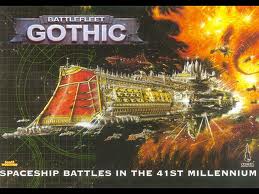
No, it's not the 'next level' space game I'm always looking for. It's basically an upgraded, tweaked Battlefleet Gothic, which focuses on objectives while orbiting a planet. But I'm going to play it anyway.

The Shiny

The rulebook is pretty. It's good quality. Nice art.  Glossy. Not a huge fan of the landscape layout - I find it harder to use.  It has an index. There are profiles for all the ships at release, so no 'codexes' needed - which is good. About 30 pages of fluff and background that you might enjoy but I was totally uninterested in. Given you can get the rules for free, with plenty of quick reference pdfs, token printouts and record sheets you can't really complain. It seems like GW is the only one not giving out free rules nowadays (stares meaningfully at $98AUD LOTR rules - without codexes).

Dropfleet Commander shares a lot of similarities with its ancestor.

Overhead/Accessibility

The rules are ~50 pages and the basic mechanics are pretty straightforward. Ship stats are very similar in layout to BFG. Ships have Hull (hitpoints), Armour (saving roll), Signature, Scan (both to do with detection range), Thrust (speed), PD (AA against missiles and fighters), and special rules like launch and atmospheric. Also size/tonnage (L, M, H etc) matters to initiative and tactics, and group size (i.e. how many in a typical squadron). Weapons have a lock (to hit) roll, and usually are usually grouped in batteries. Most weapons do a single hit damage, but there are quite a few variations and simple but flavorful special rules.

Annoyingly, DFC uses special decks - a command card deck and special bases, as well as a battlegroup deck (although for the latter I am making my own with normal playing cards). The ships come on special bases but you could get by without them. The craze for tokens, templates and stuff is pretty restrained compared to X-Wing or Armada*. (*My son loves Star Wars, and although I like the idea of X-Wing - and enjoyed its ancestor, Wings of War - I can't justify paying $30 for a single plastic spaceship, knowing I'm really mostly paying for the cards, not the mini which you can get 5 for $20 in a Micromachines box...).

Activation & Initiative

You put your ships together in battlegroups, writing them down on a battlegroup card. The total tonnage on the card determines activation order - i.e. a battlegroup with a cruiser (5) and 2 escorts (2) = 7 would be more agile than one with a single heavy cruiser (10). Basically you arrange your "hand" of battlegroup cards however you want, and then you and your opponent reveal and compare the top card of your decks, the player with the lowest rating (most nimble) battlegroup choosing whose battlegroup acts first.  It's an interesting idea and allows for a little 'management' minigame of sequencing your 'hand' of battlegroups to best effect. Ships tend to move in coherency aka grouped together. 

Orders

If it's BFG roots weren't already obvious from the stats and layout (Andy Chalmers is a designer) this cinched it. The orders are pretty similar in effect - weapons free (fire all weapons); station keeping (move slowly/pivot); course change (extra turn), max thrust (double speed) as well as silent running and active scans - something that ties in with the new detection rules.

Detection

This is a very cool idea in theory. Basically, Ship A has a Scan (autodetect) range of say 8"; and a Ship B has a 6" Signature radius (say 6" but will vary on ship size). So Ship A will detect Ship B at 8+6 = 14" away. In addition, firing lots of weapons or boosting thrusters makes the ship light up like a Christmas tree (+6" Minor Spike, +12" Major Spike) - and ships can reduce this by Running Silent.

The bigger you are, and the more stuff you do - the farther away people can shoot you from. So a small sneaky ship might only be able to be engaged by enemies 6" away while a battleship can be fired on by everyone within 24"+. Finally a way to give small ships a chance?

Sounds cool, and I've been using a similar-ish idea in my own rules, but I suspect people will sneak for the first turn or two, then everyone goes nuts shooting and zooming; and thus render it all moot.

Movement

It's the typical 'travel half your move then turn' to give the feel of momentum; but turns are 45d and many special orders you can't turn at all. It's pretty ponderous, and even small stuff isn't that agile. Maybe I remember it wrong - but even BFG ships weren't this clumsy?

I'm anxiously awaiting my official Hawk minis. Until then I will proxy with Cold Navy.

Combat

Typical 'roll a handful of d6s' scoring to hit, then rolling saving throws in an attempt to cancel them out. Similar to BFG but slicker as you don't need a stupid chart. Scores of 2 more than the target number do a critical i.e. if it's 4+ to hit, a 6 is a crit. Basically Full Thrust. Critical hits can't be 'saved.' Once a ship loses 50% hitpoints it rolls on Critical Hit sub-tables. This defeats the purpose of the special dial for hitpoints on the base of the ship - you're going to be recording critical effects over time anyway. A ship losing all HP dies with various spectacular effects. 

Launch assets (aka fighters, bombers, dropships, torpedoes etc) use abstract BFG-esque rules and are placed alongside their target or the ship they are defending - they don't swan around independently.  They can be engaged by PD as expected and ships can even do sharp turns to evade their attack runs.

Atmosphere

Another 'cool new thing' - DFC presumes no one fights in deep space (after all, what are they fighting over) - but rather over planets at 3 orbital altitudes - high, low, and atmosphere. Ships can change up and down one level per move (-4" move to climb up) and crippled ships may 'fall' through layers. Shooting between layers is a -1 penalty to hit. Only small craft and drop ships tend to be designed to work in the atmosphere layer. There are debris fields, space stations and small moons in orbit. 

Ground Combat

Now this is pretty much how you win the game - capturing ground objectives. There are clusters made up of several sectors (the actual sites you capture or bombard). The sectors have their own HP and troops occuping them must make saves when they are getting bombarded. There is a whole ground mini-game aka paper-scissors-rock-with-dice-chugging which I frankly thought was pretty crappy.

The whole atmosphere and ground combat will be a deal breaker for some. The game is kinda focussed on it. Just eyeballing the rules, I'm pretty confident I could cheese wins in this area. While I appreciate the attempt to move away from the typical 'move the ships into the middle and chug dice' to focus on objectives, it won't be everyone's cup of tea.

Extra Rules

There's about 30-40 special rules from cloaking devices, special sensors, regenerative hulls to burnthrough lasers that use the dubious exploding dice technique. 

There's pretty BFG-esque fleet organisation charts explaining what ships can go with what, and how many. I.e. both allowances and layout of specific battlegroups and the amount of specific battlegroups within fleets. 

There are 8 scenarios but I suspect the website has more (I haven't downloaded and looked through everything yet). There are simple campaigns and ideas for integrating with DFC's sister game, not-Epic Dropzone Commander, but no rules for upgrading ships and crew etc like BFG. 

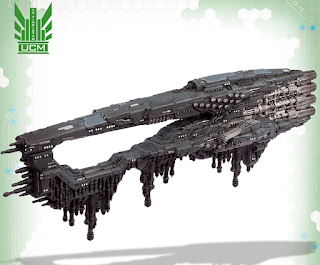
The UCM can certainly can evoke the 'cathederals in space' and I also am buying the porpoises-with-lasers PHR ships.

TL:DR

It's evolutionary not revolutionary - an updated BFG with lovely models. The focus on orbital combat and objectives rather than a typical deep space kill-them-all may put some off, but it's far more of a traditional wargame than FFG's CCG-with-minis-SW:Armada and far more interesting than the blandness of Firestorm Armada.

It's not quick - I reckon 2hrs+ for a basic battle and while an attempt was made to reduce recording it wasn't that successful. I'm also not a fan of 'special' card desks although you could probably play without them (and I probably will - I don't enjoy the 'gotcha' factor).

The game has been out for a while (I've had the rulebook since 2016) so there are probably more exhaustive reviews and plenty of AARs - and the rules are free! This is just for the blog regulars for whom this game may have flown under the radar.

Recommended: Yes. Battlefleet Gothic was a surprisingly good, fun game and Dropfleet Commander builds on that legacy with more improvements than mis-steps.

Monday, 10 January 2022

Middle Earth Strategy Battle Game - Rules Manual - Review

Due to painting hundreds of (2001 era) LOTR minis I bought years ago for literal cents, I felt it might be OK to splurge on an updated rulebook. At $98AUD it's definitely a luxury purchase. I'd rate the original 2001 rules as some of the best and most clean and elegant GW has ever produced - along with the OOP spin offs Legends of the Old West (cowboys) and Legends of the High Seas (pirates). I always thought a d10 version of this could have been a better way forward for 40K. So how resistant have the original 2001 rules been to GW's tendency to complication and meddling?

A: While there's more special rules, it's still pretty good. It's the same core game.

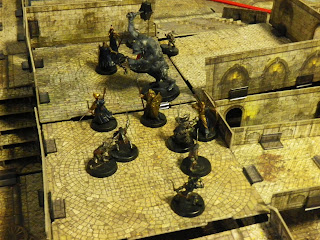
LOTR would rival Blood Bowl and Battlefleet Gothic as my most played GW game. Here's a shot from 10 years ago, where I discovered the underrated goblin ability to scale vertical surfaces....

The Shiny

The rulebook is very nice. Having just spent $35 on an incomplete pdf (cough Killwager cough) your $98 (or cheaper if you don't pay the magical Australia penalty rates) buys you 200+ pages of some very nice production values in a glossy hardcover. There are lots of lovely photos of minis for reference and the rules are easy to read. Each gameplay phase has its own chapter. There's an index, but no quick reference (you need to pay GW $55 for that) and the army stats are in separate books - for Armies of LOTR or Armies of the Hobbit. Not codexes at least - the books have all the relevant armies from each film, but it was an extra $98 I was unwilling to pay. Given I also liked Battle Companies (LOTR's Necromunda/Mordhiem equivalent) - yep an extra $84 - and the 3 necessary rulebooks alone could have cost me $280AUD (aka $200 freedumbucks). Which would be fking ridiculous.  While the book itself is great, and is probably a fair price if you don't live in Australia, the overall 'buy in' is crazy. No wonder people pirate pdfs off the net. I'm not saying you can get everything ever printed by GW about LOTR if you google in the right places *cough cough* and of course it is wrong...  ...almost as wrong as charging people $200+ for the rules to your game which many competitors do for free)

Overhead

Besides the insane rulebook+army book buy in ($200-280AUD) the rest is pretty reasonable. While the minis are smaller and less impressive (I personally prefer the more realistic, less potato-faced proportions) they are cheaper than 40K - you usually get twice as many models for the cost.  And the rules scale brilliantly - it handles 5 v 5 or 50 v 50 with equal aplomb. You could get started with a single unit box. Mentally, it's dead easy to learn - (it's similar to 40K yet simpler and has more naunce) and you'd rarely need to refer to the rulebook except ME:SBG has way more 'special rules' than the 2001 LOTR:SBG version. A tape with inches and a d6 and you're set.

Model stats are "Move, Fight, Shoot, Strength, Defence, Attacks, Wounds, Courage - all self explanatory. Heroes additionally have a finite amount of 1-3 Might, Will and Fate they can use to influence dice rolls, cheat death, perform magic, interrupt the initiative etc.

Basically, if you can cope with the initial rulebook sticker shock, the minis and armies are (relative to GW) cheap, easy to paint and the core game itself is easy to grasp.

I've continued to sporadically paint and play LOTR over the years - the sole GW game that has held my interest over time.. The red-headed stepchild of GW, LOTR has never been well appreciated...

Initiative, Activation & Movement

LOTR:SBG moved away from IGOUGO back in 2001 (back in 40K - 5th ed?) and broke up the turns into phases, which makes the game flow more. Sides roll d6 each, winner chooses who has "Priority." Roughly, it is P1 move, P2 move, P1 shoot, P2 shoot, P1 choose melee sequence. Sometimes not having priority is good (it means you can react to their move) and your heroes (and nearby troops) can act out of sequence; giving them actual command/control rather than just being tanks/dps monsters.

Models have a 1" AoE 'control zone' which enemies cannot move through, allowing you to make formations and shieldwalls and making the fight sequence (who fights who first) and 'pushback' melee results very relevant.

There are rules for climbing, defending obstacles, crawling, climbing, jumping etc and all tend to consistently use a simple method - roll d6, 1=great, 2-5=average, 6=disaster.

Combat

Shooting is just rolling a number or higher on a d6. Targets can roll a cover save if appropriate. Then you need to consult the 'to wound' chart. I'm not a fan of having to consult a chart for something so often used in the game, but you'll probably quickly memorize the most common combinations. 

Fight (melee) is just rolling a dice for each Attack. The Fight stat itself is just relevant for winning ties. I've never liked this method as I always feel more Attacks >>> Fight skill. It's quick to resolve, though.

The loser backs away 1" (which opens up gaps in formations due to the 'control zone' rule) then the winner rolls for wounds according to the same damage chart as Shooting. Models trapped by terrain or friendlies who cannot move aside, must roll for double wounds. 

Courage is tested when armies lose 50% - annoyingly this is every model in your force, for the remainder of the game - or when faced with a Terror-inducing opponent. Heroes not in melee can automatically rally nearby friendlies if they pass their Courage roll.

 Heroes, Monsters & Wargear

Heroes are done better here than in many other games.  They have a finite supply (1-3) of Might, Will and Fate. Once used they are gone. 

Might - the most interesting - allows you to modify dice rolls by +1 or perform Heroic Actions (basically moving and shooting/fighting out of sequence with yourself or nearby allies). A new addition is specialized heroic actions for particular heroes - such as double movement, shooting re-rolls, 'overboost' spells, and huge fight and defence boosts. These special rules are new to MESBG and while they add flavour and character they are something else to remember. Will is for casting spells and resisting magic. Fate allows you an extra 'save' throw to block a wound. So someone like Boromir might logically have lots of Might, probably no Will and and not much Fate.

I often borrow elements of this idea for my games, as it has simple resource management, and allows heroes to actually 'command' by acting out of sequence with nearby friendlies, making organic 'squads' happen naturally rather than being constrained by artificial "stay within 3" cohesion of each other."

Monsters also have some cinematic power attacks allowing them to hurl, barge or rend. These can be used to break through formations, rip apart well armoured foes, and fling enemies into foes or obstacles, or off a cliff. 

Weapons have simple, subtle rules that differentiate them. Spears allow the second rank to add +1 attack to the frontline. Elven weapons are more likely to win tied Fight rolls. Two-handed weapons are unwieldy to fight with but do more damage.  The weapons may also (circa 2018) do special strikes like feint+stab, piercing strike, stun and whirl which have unique benefits. 

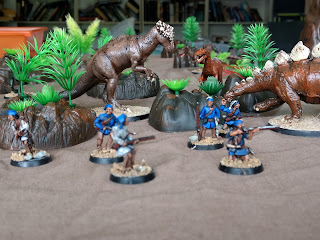
The LOTR rules served as the base of many other games - here's French and Indian wars scouts fighting dinosaurs which were easily adapted from the core rules with surprisingly few tweaks...

Magic & Special Rules

Magic can be cast in the movement phase. The magician sgets 1d6 each Will spent and if it passes the spell's casting value the spell succeeds. Targets can use Will to resist the sorcery - if they pass the casting value they negate the spell. There are some 36 spells, which is probably reasonable ME:SBG is a collection of all prior rules. There are also 37 special rules for both characters (swift movement, terror, expert shot, stalk unseen) and gear (poisoned weapons, blades of dead, bane) which again is pretty restrained. 

There are also advanced rules for shallow/deep water, carrying objects, swimming, passengers on mounts, sentries etc - which are useful for specific scenarios. There are also rules for sieges and siege weapons for recreating particular battles.

There are rules for competitive play. I always appreciate a points system - while inevitably flawed, they are a good rule of thumb to balance forces even in fun games with kids. Different heroes allow more rank-and-file to be brought; Aragon allows 18 troops to be brought, but a minor hero might only allow 6. There are 12 scenarios which is a bit above average.

The remaining 100 pages of the book are army photos (aka wargaming pr0n) of all the Hobbit and LOTR armies which is a useful reference - but I'd rather they included the stats and didn't charge me $98 for an extra book! There are also 4 example armies showing their points value and explaining the thought process behind it.

TL:DR 

A very well laid out book on it's own, but when you need 1-2 extra books the price quickly becomes excessive. The rules are familiar and straightforward, and although quite a few special rules (especially around heroes) have been added it retains the 'clean' core of 2001. It's one of the rare few games that scales from 5v5 to 50v50, and you can start with relatively few models which are also cheaper than GW's main lines.

While initiative/activation is simple it's still broken up into 4-5 phases, allowing tactical interplay and reaction beyond IGOUGO. I like how heroes actually can form organic squads without restrictive cohesion rules. This is rare. Might/Will/Fate add a simple layer of resource management and also allows heroes to 'lead' aka meddle with the initiative sequence - they aren't just 'dps' or 'tanks.'

ME:SBG does unfortunately use quite a few different resolution mechanics, and the extra rules creep plus the damage chart means it isn't quite the rulebook-free experience it could be. Nonetheless, I contend it's still one of the best rulesets GW ever produced. It's also been remarkably resilient to meddling - except for extra bolt on fluff, 20 years later it's still pretty much the same as it was in 2001 - a testament to it's original design. While I remember Mordhiem and Blood Bowl with nostalgia, they are really dated and clunky.  LOTR has really held up well over time. If only the rulebooks were cheaper.

You can use LOTR  for War of the Roses with pretty much 0 adaption. 
 Other folk have already done some work such as the Age of the Trebuchet adapotion.

Recommended: If you've got the coin, yeah. If you like LOTR, absolutely. Apart from the rulebooks themselves(!), building an army is relatively cheap - for GW.  Even if you don't like fantasy - I often use it as a reference, and it adapts well for historical battles - you could play ancients/dark ages/medieval skirmishes with almost 0 adjustment*, and GW even published cowboy and pirate versions! 

If you just want the core rules and don't need the latest and greatest: an Ebay copy of the old rules - maybe the old small softcover blue book which even has the unit profiles? - would be 1/4 of the price. It would certainly be an easy way to introduce a player into historical gaming.

*I remember a fanmade viking game called Age of Blood v2 which I'm actually looking for (freewargaming link is broken) to play with my kids who have found and appropriated some of my PSC/Gripping Beast minis...

Friday, 7 January 2022

Skirmish Sangin Rules Review

I'm exploring modern/near future combat at the moment, as part of making my own homebrew rules and also in hopes I'll find something good so I don't HAVE to make my own rules.

Sadly, Skirmish Sangin isn't what I'm looking for. For a start, it's not a wargame.

The Shiny

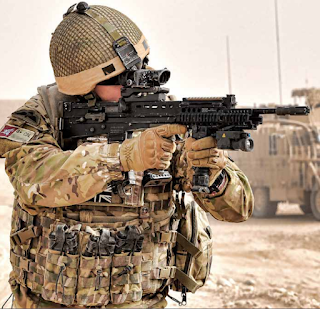
It's a 169-page PDF, pretty well designed and printer friendly.  They make it clear their focus is on narrative skirmishes (so far so good) with a bit of background on Afghanistan. There are lots of lovely photos of minis and it is easy to read. There is also a detailed index for finding things. The time and ground scale is clear (3" is ~6m). I found the squad weapon loadouts etc quite useful; there is info for British, NZ, FFL, SBS, SAS, US as well as insurgent forces etc. There are plenty of quick reference sheets. The rules are sensibly laid out. 

Overhead - aka What You Need to Play

D6s? Easy. But two d10s for d100 (%) sounds a bit ominous and gives me RPG vibes. Eek! Rifles do 2d10 damage. And there are rolls like 1d10+4.  This is clunky and over complex - I don't even like this in a RPG. Not only are there several dice resolution mechanics, but they aren't easy to remember if they vary from weapon to weapon. It's made for 6-10 soldiers per side, which frankly is looking overly optimistic.

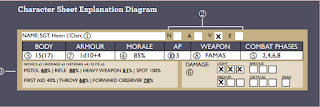
An average soldier has 1d10+10 body, 1d10+4 armour, 55% morale, 3 AP in "stats" and the skills of Pistol (bodyx3 =%); rifle (bodyx3+10%), spot 100%, first aid 40%, heavy weapons (bodyx2=%); throw (bodyx3=%); forward observer (bodyx2=%)

The above paragraph should tell you everything you need to know about how gluggy, convoluted, old school, and RPG-ish this game is. Creating as force is about as laborious as setting up a D&D party.

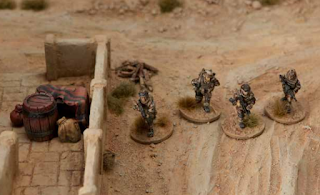
This is one member of your 10-man squad.

Activation & Initiative

Yes, the players use action points (yay the 90s) and their "Body" stat determines in which of the 10 combat phrases they activate - basically you go down your forces from highest to lowest BODY (representing agility etc) checking who can activate. Models can use 3AP in each phase they are active, to do the usual walk, climb a high obstacle, climb a low obstacle, climb through a window, stand up from prone, kneel - you get the idea, it's pretty detailed. 

On the upside, the action is broken into small segments and I kinda like the 'SFB impulse' idea.

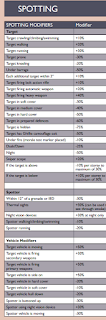
Models must spot enemies in their 180 front arc - this is 100% but can be reduced by cover, visibility conditions, and increased by target movement etc. There's a lot to keep track of. There are 37(!) spotting modifiers. That must be a modifier record out of all the rules I've ever owned. 

The dedication to modifiers and charts is impressive. Possibly a record? 
Especially since spotting is something you do relatively often...

Combat

Shooting also has plenty of modifiers but a mere 27 this time. These are a % change i.e. a solider may have a 45% chance to hit, but +/- various 10% increments. Surprisingly, weapons are lumped together by type i.e. SMG, assault rifle, sniper rifle, LMG and there's no DMR or differentiation by calibre. Given the level of detail, I was expecting weapons to be all different i.e. M4 having different stats to a M16. Units can 'snap fire' out of sequence with -30% shooting and forfeit their next activation.

When hit models can make armour rolls (1d10+4 etc) to block incoming damage. Damage that exceeds this has effects on the wound chart.  Of course each model also has 12 hitpoints. Hitpoints, bah. Models can also fall unconscious.

The wound table is predictably detailed, e.g. seriously wounded models -20% off morale of allies in 12" due to their screaming, among 6 other effects of being seriously wounded. Of course, you can also have a light, medium, or critical wound with their own accompanying effects.

There are predictably detailed rules for grenades, smoke launchers, etc. In hand to hand combat sides take turns hitting each other (meh) but can use special multiple-AP maneuvers to modify to hit/damage, like feinting, circling, all out attack etc (cool). I like variety in melee, allowing some decisions not just shoving models together and rolling dice (I think this is food for a game design article).

There are lots of % morale tests, with the game recommending stacking counters for each 10% morale penalty. Agh, just please - no. Well, there are only 13 modifiers this time, so perhaps I shouldn't complain...

There are rules for heavy and vehicle weapons, vehicle combat and indirect fire but I'm not going to waste time describing them as by now you should know if this is sort of game you'll love or loathe. I suppose there is an audience for clunky convoluted pseudo RPGs*...

*There is even a whole page of "fumbles" and "criticals" - if you ever roll a 01 or 00 on your % dice. There are penetration charts taking up a whole page. There are literally hundreds of modifiers for various actions. (Yes, vehicles get their own tables and modifiers). Ironically, a dedicated RPG like Savage Worlds has smoother, more consistent gameplay and combat.

The PDF has lovely art and is one of the best laid out PDFs I've owned.

TL:DR

While well presented in a good PDF, Skirmish Sangin is a clunky 1990s RPG dressed up as a modern narrative skirmish game. If you love convoluted rules, charts and think game design peaked in the 1990s with WRG and you think D&D has fluid combat, you may love this. There are literally a hundred modifiers, charts galore, many different dice mechanics, and plenty of opportunity to clutter the table with tokens. If you can imagine it, there is probably a detailed rule explaining exactly how you can do it. However, I found it was odd that along with such excessive detail things like DMRs were absent and it didn't differentiate between 5.56 and 7.62mm rifles.  I liked the melee options and thought the activation method was interesting but Skirmish Sangin is not my style. But if you enjoy lots of dice rolling and looking up charts and modifiers over actually playing a game, you'll love this. 

Recommended? No.

While not an exhaustive list, these are some other modern warfare options I've tried lately:

Ambush Alley is Stargrunt remastered and while good is actually slower/gluggier than it seems. Osprey.

Black Ops is 40K Kill Team with TFL card mechanics. Cheap Osprey blue book.

Spectre is a solid generic toolkit but I've only played the alpha rules due to the $50(!) P&P.

Killwager is very innovative and Infinity-esque but terribly explained, overpriced and incomplete.

5 Core/5 Parasecs if you want the RPG campaign experience without the clunky 90s mechanics

Gruntz: Spec Ops is rebadged Warmachine rules. PDF.

Infinity: Code One is free and is a simple version of the excellent but complex sci fi Infinity rules.

Zona Alfa is STALKER post-apoc; a pretty straightforward set of rules. Another cheap Osprey title.

Out of these, Infinity and Ambush Alley I've played the most, and Spectre is what I'd probably recommend to a player new to moderns or wargaming.

Saturday, 7 August 2021

Dracula's America (Rules Review) Weird West/Gothic Horror Skirmish

Not a bad set of rules - but I feel like I could have skipped these and saved my money. It just feels like house rule/simplified Savage Worlds/Deadlands with lots of stuff removed.   Remove all the SW stats and replace them with a single "do everything" stat called "Grit."  Prune away most of the spells, skills and abilities. Add in a generic Necromunda-lite campaign system like most skirmish games are doing nowdays.Voila! In fact, this could have been an Osprey Blue Book - I don't feel it needed 137 pages and a hardback version. It's not a bad set of rules though.

The Shiny

It's a 137-page rulebook, hardbacked, which is very generously spaced out (easy to read). There's decent art and pictures of minis, a nice table of contents and a quick reference which I always appreciate. It's an easy rulebook to use and looks pretty. The fluff is pretty cool - Dracula assumes control of the Union after Lincoln is assassinated, the Confederacey dabbles in zombies, railway occultists clash with Indian skinwalkers...   Even better, the fluff does not get in the way of the rules which are laid out logically.  Well laid out, pretty rulebook.

Overhead

You need 6+ each of d6, d8 and d10s, you roll a number of the specified dice with 5+ being a success. Your dice is determined if you are novice (d6), veteran (d8) or hero (d10). Modifiers are applied by adding or removing dice. If you get the max score on a dice (6 on a d6) you can re-roll another failed dice. You count up your successes. You also need some tokens for overwatch, jammed weapons, and "done acting" etc. 

Instead of a "long line of statistics to determine how tough, accurate or brave a model is" - the book is proud of how it makes them all a single stat, Grit. I'll spare you the full rant on how illogical this is but merely observe this merely means (a) either all models are the same, or (b) the author relies on a "long list of special rules" to differentiate each model.  Yeah, you guessed it. Each model gets a literal paragraph of explanations and special rules under them, and it somehow makes it 'simpler' than using evil stats. I mean, it's not like wargamers would understand stats like Move, Shoot, Fight, Defence and Will. Lucky we avoided those complicated stats, boys!

Despite my gripes, with only about 30 pages of main rules (and pretty consistent mechanics) it's not complicated to learn.

Given its a skirmish game, mini requirements (6-10) aren't high. It's pretty simple/logical in its mechanics, and most people have a range of dice nowadays. I'd say it's pretty accessible.


Activation

It uses a playing card activation system, probably because all Wild West games have one, but it doesn't accomplish much for the extra work it adds. Players get cards = their leader + 1/2 their warband. They can activate one or two minis with each card draw. Players play cards with high cards going first.  Facing matters (which is good) and models can move, shoot, fight or lookout (hold/overwatch).

While the cardplaying aspect does add some choice (i.e. play your best card to try to go first) I don't think it's worth the effort.  

Movement & Combat

All models move 4" (but I'm sure there's extra special rules for faster and slower models) and the usual charge/climb/jump/fall rules that exist in most skirmish games. Models are impacted by their 180d facing/vision arc which is good and adds tactics. Models can hold an action to react later to opponents.

Models Shoot at the closest enemy target (but may attempt to override this with a test) and you can pre-measure to see if the target is in close/medium/long range. The shooter makes a 3-dice test based on their Grit (basically d6, 8 or 10 depending on their level of experience). There are modifiers for range and cover. Some weapons need to make a Jam check.  Weapons have the usual 40K ranges ie. 24" for rifle, 18" carbine/bow, 12" pistol and naturally they all get their own special rule.

If a target is hit, it also rolls "save" using its Grit, modified by the successes the firer inflicted.  

When models Fight, both models roll 3 dice and compare their successes; with the winner doing the damage (and a possibility for draws). The loser makes a save as per shooting attacks. The winner can choose to "pushback" opponents which could add some cinematic moments. 

When rolling for damage, the 'degree of failure' determines if a model is shaken, downed or removed completely. I.e. you need a 7 and roll a 5 you might be shaken, but if you rolled a 3 you would be downed. 

Morale is very simple; once 50% casualties, the highest ranked model makes a test.

There are rules for mounted combat, dynamite, bystanders (including human shields) random events and unusual terrain like gunpowder barrels. 

The actual combat mechanics are pretty straightforward. Not bad, not great. "OK"


Campaigns & Other Stuff (aka the other 100 pages)

You start with a d10 hero and d6 novices. You arm your models and add "skills" from a list of 18. Which is less than you think as most of these skills do things like add +1 Fight and +1 Defence, and +1 to Shoot tests (cough cough...  acting just like stats). <- is the horse dead yet? Let me whack it again

There is a decent 8 scenarios and there are rules for team games.  There are optional "Agendas" (like assassinating an enemy boss) which are kinda like side-missions to earn extra Victory Points. Although I can't test this, I suspect this game would shine in a multiplayer demo/club-game format with competing gangs. 

There are the usual campaign tables for injuries and advancements - the advancements are somewhat randomized - sometimes you can choose, and sometimes you can't. Your gang has income and it has a "encounter" chart where you can roll for random occurances. (You can also use a supernatural encounter chart instead). You must roll for new recruits and may get novices or veterans based on circumstances - but getting better recruits if you win seems likely to "snowball" things so better gangs get even better - not wise in my opinion. Underdogs do get extra funds.

There are rules for hired guns (specialists who must be paid each campaign turn) who of course each come with their own paragraph of special rules. You can buy and sell weapons, horses and gear from a list of about 30 choices- from snake oil to telescopic sights. 

There is a list of supernatural models (which can be summoned by some gangs) and arcane powers - the 11 spells seem to be culled from Savage Worlds but this is probably a coincidence. 

There is a list of factions - vampires, monster hunters, skinwalkers, railway cultists, voodoo abolitionists, Confederate necromancers, etc - each with their own benefits and rules.

There are rules for in-game supernatural events (which can replace unexpected events) - such as zombie outbreaks.  Finally there is a bestiary of monsters and supernatural hired guns, as well as supernatural gear like silver bullets, grimoires, holy symbolsetc.

Actually this is one of the best/most comprehensive Necromunda-esque campaigns I've seen in a while, with lots of charts and stuff to do.

TL:DR Recommended? Maybe

As the owner of Savage Worlds/Deadlands I feel this is a bit of a wasted purchase (i.e. it's an expensive yet stripped down version of what I already have), but this is by no means a bad game. The rulebook is well laid out. While I'm not a fan of the card activation or the "single stat does everything" approach; combat mechanics are straightforward enough, and it has a campaign system which is more in-depth than most I see. I can certainly see it working very well in a club/multiplayer setup where you can play 1v1s, 3-4 player free-for-alls etc - depending on who wants to play.

Zona Alfa (Rules Review) for STALKER/Metro 2033 Skirmish

Probably my initial favourite of the 3 Osprey books to land on my doorstep lately, Zona Alfa is a a pretty straightforward game for playing 28mm S.T.A.L.K.E.R and Metro 2033 skirmishes - you know, post-apoc Russia in "The Zone" - home to mutants and radioactive artifacts.

The Shiny

It's a typical 64-page Osprey Blue Book - softcover, with bits of Osprey art and photos of minis. It was quite dense with a high text:image ratio. It had a good table of contents and I found it easy enough to use and navigate. 3.6 roetengen - not great, not terrible.

 Overhead

It plays on a 4x4 table, using 4-12 minis from any company. The rules are cheap and it uses d6 and 4+ d10 dice. It's pretty cheap.  You'll need 4 types of tokens for status markers. A fair bit of terrain would be good, but you could use most WW2-modern or ruined buildings. The rules are pretty consistent, simple and logical.  Models have 4 stats - Move, Combat (a mix of shooting/melee skill), Armour and Will. A good mix. The core rules are 24 page long and there's only a dozen special rules. These rules are cheap and very accessible.

Initiative & Activation

It's alternate activation, with no rules for mitigating bigger forces (i.e. the more numerous side tends to get a tactical advantage with unopposed moves). It revives the old (early 2000s?) "action point" system; basically rookies get 1 action (move or shoot); a regular 2 and a veteran 3. Basically, better troops can do more stuff, and start with more skills. 

Once activated, soldiers can choose to shoot, move, aim, climb, reload, remove pins, etc as an "action" or reserve an action for later (aka overwatch) at the cost of two actions. Some complex skills like defusing bombs require a "Will Check." This is all logical and solid without being amazing. 


Movement

Models get a 360 FOV (I prefer 180 as it adds more choices at the no real extra complexity). Obstructions, soft and hard cover add modifiers to firing and even Will. Troops move individually except pack of rats, etc which have a 1" coherency. There are climbing and jumping rules. Again, very simple.

Combat

You roll a d10, and score equal or less that the (modified) Combat stat. Rolling low is a little odd, but I can't complain as I've just been using it for my own homebrew rules. 

Any hits can be "saved" by the defender rolling equal or under their Armour (minus any weapon bonuses).  

Melee is simultaneous - a defender gets a free "fight back" - which means both models can take each other out at the same time - which I'm not a huge fan of. Attackers (active player) can use their hits to cancel defender hits which should favour the attacker.

Rolling low is a bit unusual, but rest is simple & consistent - but not a huge fan of the melee rules.

The rules are quite dense at times compared to other Osprey Blue Books.

Damage

There are successful damaging hits, and those deflected by an armour save. A successful hit wounds which knocks out/removes most non-hero models (mitigated by medikits). A deflected hit causes a Will Check - failing this roll collects a pinned token. A hero with a wound halves their speed and combat stats. Pinned models cannot do anything except defend themselves and remove pinned tokens by using actions in their turn.  This is again, simple and straightforward.

Gear, Skills, Squad Creation (Necromunda-esque stuff)

There is a decent, logical range of armour and weapons from teeth, claws and machetes to assault rifles, flamers and HMGs and grenades. There are 8 weapon special rules but they are logical - like "Reload" - the weapon (say a RPG) must reload after each shot.  

Troops choose from a restrained 11 special skills and can choose from 15 pieces of equipment like binos, gas marks, anomaly detectors etc. 

Crews are bought/balanced based on total actions (i.e. a squad of 4 rookies would be worth 4, while 4 veterans would be worth 12). You can also "trade" an action and raise a single stat of a model by 1. I.e. instead of paying 3 for a 3-action veteran, you could pay 3 for a 2-action regular with a +1 combat stat.

Factions include traders, scientists, military, independents, cultists and bandits which come with their own squad pros and cons. They can be allied, neutral or enemies to other factions. 

Crews collect "advances" (like XP) and can improve stats, equipment and skills; which can also be purchased with cash. Wounded/downded models can collect injury effects. You can buy new gear and weapons for cash and hire new recruits.  It's a typical Necromunda/Mordhiem system, but on the light side.


Missions

The missions themselves have "threat levels" based on how far you go into the Zone. "Hot Spots" are marked places on the table that can contain loot or threats - more dangerous missions have more hot spots with more risk vs reward dilemmas. Hot Spots can be triggered by base contact or a "bolt toss" (a tribute to STALKER) and spawn random hostile mobs which must be eliminated before the area can be searched for salvage. Sometimes a hot spot can trigger a dangerous but valuable anomaly. This must be cautiously searched using a Will Check (and a detector) to collect rare artifacts - or suffer dangerous effects.

The missions themselves are more suggestions - Zona Alfa is designed to be played with mates, creating your own stories and missions, rather than competitively. There's a mere three fully fleshed out mission examples.  The hot spots and Zone threats are cool and give a STALKER vibe, but there's nowhere near enough "proper" missions. 


TL:DR Recommend? Yes

There's nothing new or exciting but it does what it says on the tin - deliver a simple, unobtrusive set of rules that don't interfere with playing a game. Its consistent mechanics and sensible amount of special rules means it is an easy game to teach to newcomers or as a club game. It has a reasonable campaign system and interesting "Zone" mechanics, but lack of proper missions are a drawback. It's not an exhaustive, complex ruleset, and is clearly aimed at narrative, not competitive play. If you want to get minis on the table, and game a campaign in the "Zone" - then I can strongly recommend Zona Alfa.

Saturday, 31 July 2021

Gaslands: Refuelled (Rules Review)

This is an awesome concept. Grab some Hot Wheels, create "Death Race/Mad Max/Carmageddon"  - I've experimented a bit in the past with house rules and my unlucky son's cars - using a Star Fleet Battles-style impulse mechanic (i.e. each "turn" is broken up into very small movements of only a few "carlengths" - I used 4cm increments to avoid using rulers which seemed clever at the time - but wasn't).

Interestingly, Gaslands sort of does this, mixed with X-Wing style maneuvers.  I have to give Gaslands credit - it has inspired more scratchbuilding (and even a school project) with less actual playing than any game I own.  Heck it even inspired me to finally pull the trigger on a 3D printer. Whether that is a plus or minus is up to you...


The Shiny

It's one of Osprey's "proper" hardbacks and has lots of inspiring art and pictures of modded toy cars.  I think it was expanded to its current 178 pages from a 64-page Osprey "blue book" so it is easy to read and comfortably laid out. I found it easy to use and navigate though I'm wary its binding will last. It has quick reference rules and a clear index to navigate with. There are ~20 pages of rules, ~20 pages of additional rules, ~20 of advanced rules, and the rest was campaigns/points lists/customisation/scenarios etc. The rules also have plenty of examples of play (which are needed). Except for concerns over its long-term durability on the table (the binding seems tenuous), it's a good rulebook.


Overhead (aka what do you need to play)

Cars are cheap and easy to mod - but the accessories (ram bars, guns etc) were astonishingly GW-bitz-style pricey. I mean, it's $20 for 10 cars, but could be $80 for specialist bits to equip them...  However I and my schoolkids did OK finding random stuff from the hardware store (rocket pods from plastic screw sheaths were popular).

However the scratch-building aspect is addictive. There's a surprisingly large "scene" for just detailing and modding Hotwheels and bucketloads of video tutorials etc out there.

With regards to the rules overhead - I did not find the whole activation/movement system very intuitive. I was not the only one. I looked up some "how to play" Youtube videos and THEY were often wrong! I found the rules quite obtuse for what screams out as a quick "pick up and play casually with mates." The templates were also a pain and for f--ks sake why the custom dice?  It seems like more the thing FFG would do than an indie rule developer. Making your own dice (or ordering them online) is just another barrier to play, given you already need to make or buy move templates.  There's also quite a lot of tokens and tracking (thankfully off-table) so you can't handle many cars at a time.

It's weird. On one hand, the scratch-building can be wildly cheap and accessible; but it can get expensive if you are a perfectionist and want bespoke parts. The rules themselves seem aimed for club games (or a class of kids/bunch of mates) with a few cars each; but were a bit gluggy and unintuitive for newer gamers. Making (or buying) custom dice and move templates may also be offputting for some.


Activation & Initiative

Basically it's got a feel similar to X-Wing, with move templates. A turn is broken into 6 "sub-turns" - a car in 6th gear can act in all 6 stages (like SFB "impulses") and a car in 3rd gear can act in 3 out of the 6 sub-turns.  Your car begins in a gear - aka speed - (shown by a d6) and can choose from a range of maneuvers appropriate for the speed.  Depending on the maneuver, the player rolls Skid Dice, may shift up or down gear (speed), or add Hazard Tokens. The car may slide and test for collision. This is quite involved and I suggest you watch a Youtube video rather than have me attempt to describe it in detail.  I do like the "you touch it you use it" rule which means you can't be too "gamey" in choosing the perfect move - if you pick up a move template, you commit to using it.

Movement gives a decent car combat feel but is not naturally fast to grasp and did not translate well for teenagers. Many youtubers even had issues playing it the way it was supposed to be played. It's the core "guts" of the game (combat is very simple and vanilla), but isn't necessarily simple or smooth if you don't have others to teach you.  This is the part of the game that will "make or break" it for you.

Combat & Cool Stuff

This is much more straightforward. You use the straight move templates and some burst templates you make yourself for ranges, and roll dice with 4+s hitting and 6s being crits a la Full Thrust. The target can evade using dice = to their gear - i.e. a car in 4th could roll 4 dice - with '6's cancelling out hits. I normally hate hitpoints but compared to everything else, this is the least of my concerns.

Cars which collect hazard tokens from wild maneuvers can "wipeout"  and flip/roll; likewise cars losing all hitpoints can be wrecked - skidding to a halt, and perhaps colliding with cars or exploding. There are plenty of rules for collisions, and ramming - it's quite cinematic.

All in all, combat is very simple albeit involving some recording.


Campaigns, Teams etc

There are plenty of "teams" to choose from which cover most cinema/game archetypes. You can have a lot of fun building your team - both in theory and physically. Everyone agreed this was cool, and students easily grasped how it worked. There are also free online tools to assist this. Vehicles are divided into types - buggies, sports cars, monster trucks, trucks, enormous war rigs etc - you can find a slot for any car in your collection.  There are plenty of weapons - from crew fired nets, moltovs and shotguns to dropped mines and oil slicks, as well as the expected vehicle-mounted rockets, machine guns, harpoons, etc. Want a catapult that shoots car bodies? Gaslands has you covered.

Gaslands is cast as a televised Death Race sport, so you can get audience votes from having your vehicles wrecked - allowing you bonus gear changes, reloads, and buffs/debuffs to assist the underdog. 

The sponsors are the team themes - like Necromunda gangs - and include Japanese precision drivers, US militia-with-heavier vehicles, hot rod cultists, ferals with spikey cars, condemmed prisoners, road pirates, and Judge-Dredd highway patrol among ghost cars and bootleggers.  Each sponsor can allow special rules and perks - so a team with "Built" perks could access skills to improve ramming, flips and rolls and crush effects - "Military" perks access skills for accuracy, rate of fire, better critical hits. There are 11 skill "sets" each with 6 subskills. 

There is a scenario generator for televiewed events and wasteland skirmishes; scenarios include their own rules and winning conditions - death races, capture the flag, express delivery, salvage missions - there are 17 missions which is quite impressive. There are also rules for a narrative campaign of a team that defends it customisable war rig base against raiders while en-route to an event.

There are campaign rules for TV "seasons" where audience votes help weaker teams, there are championship points (VP) awarded for various actions, "cans" aka cash for upgrades/new cars, and wrecked cars get an "injury table" - they get "Dents" which may cause it to lose perks or upgrades, or crew etc - or be a total write off with dead crew.  Interestingly, a player can cancel out "dents" for other perks - called "Injuries".  Injuries have their own effects - i.e. a "Deathwish" injury means the car cannot shift (slow) down. 

The whole campaign section seems well done, and there is great customisation and team-building options. I've certainly had more fun theory-crafting and building teams and kitbashing cars than actually playing!


TL:DR

It reminds me of a FFG-style commercial game made by Osprey. It is at once appealingly accessible - and not. Creating your own cars out of cheap kitbashed Hot Wheels, with Necromunda-esque teams and campaigns are very appealing... ....It seems easy to jump aboard. However the custom dice and templates, and unintuitive activation and movement seem counter to being a "quick pick up and play" demo game to play with mates. It would be fine if you are playing in a club of veteran wargamers, but I suspect those folk have already tried Gaslands and are not reading this review. 

Recommended? On the fence. Despite barely playing it, I've had lots of fun making kitbashed cars and theorycrafted teams and I am happy with my purchase. It would be a fun game if you had a group of experienced gamers each controlling a car or two each. However it's not for everyone, and is less accessible than it appears - definitely check out gameplay videos before playing to see what is involved.  Gaslands is kinda like a visit to the cinemas where the trailer does not match the movie - but it could be good or bad depending on the viewer.

However, whether you get the rules or not, customising Hot Wheels is great fun and 100% recommended!

Wednesday, 21 July 2021

Cruel Seas (Rules Review)

I've had these for a while, bought during a major Warlord (Chrismas?) sale. I love reading about WW2 MTB combat; indeed my space and sub rules always have a MTB "flavour" - slow-and-sneaky which can change to loud-fast-pew pew. I'm not super motivated to finish painting my minis or play more - the rules are straightforward but merely "meh."  But their worst crime (beside some weird omissions) is that they don't actually emulate MTB combat very well.

The Shiny

It's a 107-page softcover of which the basic rules only take up 12 pages, with about 50 extra advanced rules. There are plenty of diagrams and models of ships - it's a nice book, and actually a pretty easy read, laid out logically with key info at the front and background fluff at the back, along with quick reference rules (why don't rules designers do this any more?). It's well laid out.

Overhead (what you need to play)

A starter set (with 10 lovely 1:300 boats, card terrain etc) is about $100AUD. For activation you need a d6 every unit. D10 are also used for firing. There are wake markers and ship data sheets that come with official Warlord models, but the rules have ship stats so you could make your own, which is nice. A ruler with turn markers was included. I supplemented my starter box with some extra boxes at $40AUD each. If two players split this, it would be quite affordable. A blue sheet makes a good ocean and islands (painted rubber islands cut from black flooring) were easy. It's actually pretty easy to set up. There's quite a lot of hitpoints to track and weapons to fire for each boat - it's a bit clunky but not complicated at all. This is a pretty accessible rules set and I felt it was reasonable affordable for what you got.

Activation

It uses the self-proclaimed "innovative and award winning" activation from Bolt Action. Which is just pulling dice out of a bag. When it's your colour dice, you activate a boat and do all your moving and shooting.  Basically bigger fleets have more opportunities to co-ordinate regardless of crew skill (i.e. kinda the opposite you would expect). See my post on unfair activation for more on this. It's not bad, but it's certainly not innovative nor particularly good.

Movement

Boats move at a cm per knot, and can choose fractions (i.e. slow, full, combat) of the top speed. They can change speed by one level each time they activate. Wake markers are placed behind ships and denote speed in a simple way. The ability to pivot turn stationary is a bit weird especially as it seems to apply to bigger ships; also from my reading it seems a slow 15kt freighter at full speed would turn sharper than a 30kt MTB at half speed.

Firing

I was startled there was no proper stealth/detection mechanics. As MTB combat revolved around this, it's a pretty startling omission.  Accounts of MTB battles revolved around stealth, detection, and surprise. While there are rules for spotlights and starshells, they are more a "to hit" bonus that detection.

This is a huge issue if you are seeking a realistic feel - things like weapon ranges are almost irrelevant at most WW2 night combat ranges, where sneaking in slowly on silenced engines was the main attack method. Often MTBs did diversions - with one boat firing and throwing up a visible wake with roaring engines while the others quietly moved to attack. Fights were chaotic and often in small-arms (and grenade!) range; with accidental ramming common. Enemies could be decoyed with smoke floats (flares) and friendly fire was common.

I'd suggest something like Dropfleet Commander; each ship has a "detection radius" beyond which it cannot be fired upon. I.e. a MTB might only be able to be fired on from 20cm away when running silent. This then expands by +15cm if the MTB goes over 15kts, and another +15cm if it fires its guns. No dice rolls needed. So the more noisy a ship is, the further away it can be spotted and engaged.

Anyway, in Cruel Seas, ships can fire at any 1/3rd of their turn, and many have quite a few weapons each with their own dice and arcs of fire.  Weapons fire 40-70cm set against the average 30-40cm move, and a 5 or less is needed on d10 (modified for crew, speed, target size etc).  Personally, I'd have amalgamated all rapid fire weapons (HMG, cannon) into a "firepower" stat and done a single roll; as most MTBs have 4 or so weapon mounts. Torpedoes are physical markers that travel 40cm/turn in a line across the board (like Battlefleet Gothic) and roll to hit (based on size) if they intercept any part of any vessel.   I couldn't find rules for reloading torpedoes despite the fact S-boots could.

Damage is done by d6s - a 20mm might have 3D6 and a 6-pdr 5D6. The total score is the hitpoints done, which is recorded on a slider on the target's data chart. I'm not a fan of hitpoints, but they are pretty standard in naval games so I was expecting them. They are pretty excessive though - 45(!) for a normal S-Boot.  I still reckon they could even have streamlined it into "status" levels like "temporarily shocked/light damage/heavy damage/crippled/sunk." Critical damage (to engines, bridge, rudder, guns etc) can occur when '6's are thrown.  But it seems like a destroyer could have its guns knocked out by MGs.

Scenarios and Other Stuff

There are 12 scenarios in the base and advanced rules. The "advanced rules" for experienced crew, multibarrel weapons, crits and repairs  should probably be the base rules. I'm not sure how much effect shell splashes had in real life - I can't recall it being mentioned much in books I've read - the boats would probably outpace them and they would probably obscure a target, not make it easier to hit.

Separating extra rules for crossing wakes, collision and ramming, radar, depth charges, mines and smokescreens is fair as they would not happen often or for specific scenarios. There are also rules for weather, terrain like shoals, sandbanks etc. Exotic weapons like Linse boats, mortars, rockets and zigzag torpedoes are also included. 

Aircraft played a large role in WW2 coastal warfare (restricting small craft to mostly night ops) and while fast and powerful, are restricted to a single attack run unless veteran pilots. There is even chance they will misidentify and attack their own ships! (I couldn't find strafing rules? only bombs and torpedoes - which is weird if it is an omission)

Some minimalist submarines are also included (including minisubs) but are mostly used for specific missions or scenarios. 

Historical Stuff

There's a short history of MTBs (in each of the theatres of war) and a section on the ships and models of each of the key navies. The authors enthusiasm for their topic shines through but by putting this towards the back of the book (unlike many authors who lead with "background" in their rules) it does not get in the way of easily looking up rules - something all rules writers should take note of. I'd suggest there are too many big ships (destroyers, frigates etc) listed at the expense of lacking enough actual MTBs/MGBs; nor was there enough weapon loadouts which varied widely from boat to boat, and year to year.

Ship Rosters & Campaigns

If you don't use the Warlord minis (and their ship cards) you can make your own using the ship rosters at the back of the book, which is nice. You can also add special abilities in a campaign but this is extremely cursory (just a single ability chart and a weather chart) which I found very disappointing.


TL:DR

A pretty easy system to get into and a nicely laid out set of rules with cool fluff, it has pretty simple (but not innovative!) activation and movement, using familiar d6/d10 mechanics.  Although it is easy to read (and would probably be a OK intro if you are new to the era/genre), there are a lot of vague grey areas or omissions. For a professional set of rules, it seemed like it needed more testing/checking. The style is there but substance is lacking.

I feel the combat resolution (while simple) is the weakest area; it is a bit clunky where you might be firing several weapon mounts, and the excessive hitpoints could be streamlined. The historical fluff is done well and it's nice to see a quick reference chart included for once. The campaign system is almost nonexistent and a missed opportunity.

However, despite the authors obvious love of the topic, I don't think the rules are very "historical" (well, at least from my readings of books like The Narrow Seas). There are some odd choices/flaws and omissions even on casual perusal and the lack of proper detection rules is a huge mis-step in a genre that should focus on it.

Recommended? Meh. I won't be playing them - while I like the models, I'll use either "Schnell Rules for Schnellboote" or my own house rules. It's OK as a game I guess - Cruel Seas is fine for pushing model boats around and pew pewing, but fails to give me the feel of WW2 coastal combat I seek.

NOTE: Holidays are over, so blogging will probably be sporadic henceforth (though hopefully without year-long gaps!)